Canadian, 4 Americans Among 69 Dead in Spain Train Collision
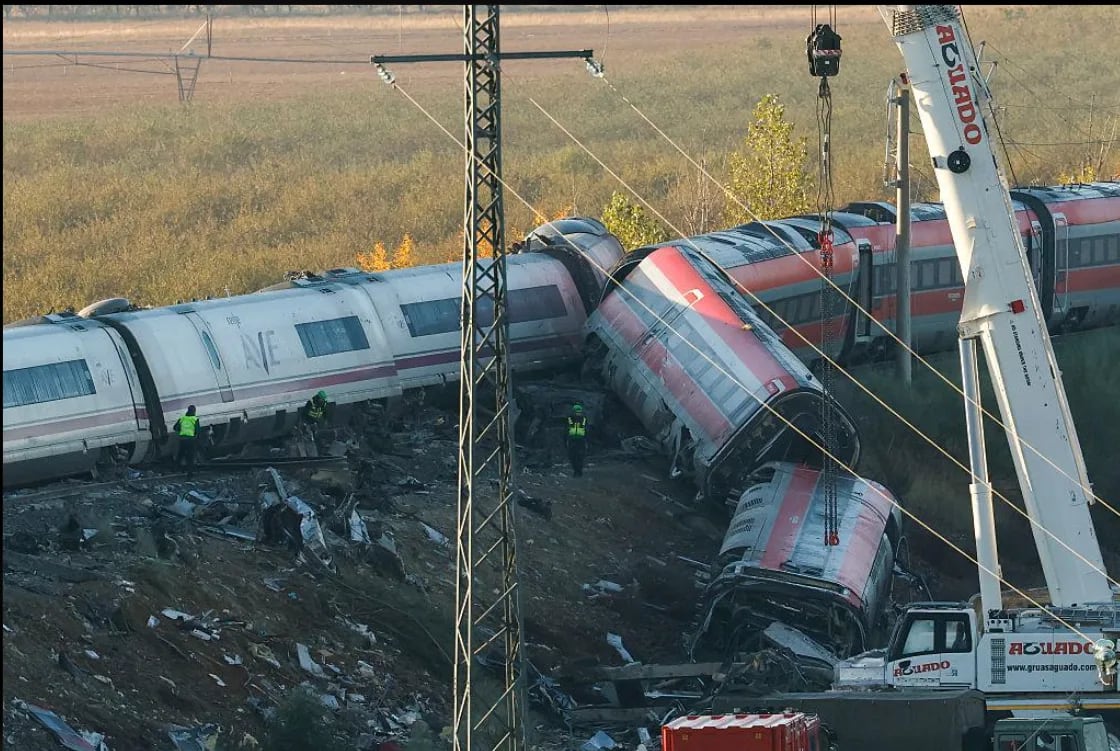
Spain train collision kills 69 people, including four Americans and one Canadian. Authorities identify 66 victims as investigations continue.
A deadly high-speed train collision in Spain has claimed 69 lives, including four American citizens and one Canadian national. Authorities have identified 66 victims so far as investigators continue examining the circumstances surrounding the disaster.
A Canadian national and four American citizens are among the 69 people killed in a devastating high-speed train collision in Spain, according to Spanish authorities. The accident, which occurred last Wednesday near the town of Urda in Toledo province, has raised fresh concerns about railway safety in the country and prompted an extensive investigation into the circumstances that led to the tragedy.
Spanish authorities announced on Sunday that 66 of the 69 victims had been formally identified. The identification process has involved forensic specialists, police investigators and DNA experts working to establish the identities of those who lost their lives.
66 Victims Identified as Authorities Confirm Foreign Nationals
According to the latest information released by Spain's identification authorities, 54 of the 66 identified victims were Spanish nationals, while 12 were citizens of other countries.
The foreign nationals identified among the deceased include four Americans, one Canadian, and one citizen each from Argentina, the Czech Republic, France, Japan, Mexico, Portugal and Tunisia.
Authorities said that three victims were still awaiting formal identification as of Monday, November 2. Their families have expressed a desire to travel to Spain to participate personally in the identification procedures.
Officials have also confirmed that three missing-person reports remain active. These concern two Australian nationals and one Japanese citizen.
The identification process has required extensive forensic work. According to Spanish authorities, 53 victims were identified through fingerprint analysis conducted by the Civil Guard, while another 13 were identified through DNA testing carried out by the National Institute of Toxicology in coordination with police specialists.
Families of 60 identified victims had been officially notified by Sunday night.
How the Deadly Spain Train Collision Happened
The accident occurred on October 28, 2026, when two high-speed trains travelling along Spain's Madrid-Seville railway corridor were involved in a devastating collision near Urda, in the province of Toledo.
The trains involved belonged to Spain's state-owned railway operator Renfe and private rail company Iryo. Both services were travelling south from Madrid towards Seville with hundreds of passengers on board.
According to preliminary information, the Iryo train had stopped on the tracks following a reported failure involving the railway's automatic safety system. A Renfe high-speed train subsequently collided with the rear of the stationary Iryo service.
The impact caused several carriages to derail, leaving parts of the trains severely damaged and creating a major emergency response situation.
More than 540 passengers were travelling on the two trains combined. Emergency services, firefighters, police officers and military rescue personnel were deployed to the accident site to assist passengers, recover victims and search through the wreckage.
The scale of the destruction made rescue and identification operations particularly challenging.
Railway Safety System Under Investigation
The circumstances surrounding the collision have raised serious questions about Spain's railway safety procedures and the functioning of its automatic train protection systems.
Transport Minister Óscar Puente previously indicated that a computer-related malfunction had affected railway operations along a 63-kilometre section of track. The technical failure reportedly caused multiple trains to stop.
Following the disruption, the central railway control centre authorised the Renfe train to resume its journey. Preliminary findings have raised questions about why the service was allowed to continue despite the presence of another stationary train further along the track.
Investigators are examining the decisions made by railway controllers, the functioning of the safety equipment and the communication procedures followed before the collision.
Railway unions have also raised concerns about working conditions, staffing levels and the pressure placed on railway control personnel.
However, the investigation remains ongoing, and authorities have not yet established final responsibility for the accident.
Second Major Train Disaster on the Madrid-Seville Route This Year
The latest collision has intensified concerns because it is the second major deadly train accident involving Spain's railway network this year.
In January 2026, another collision on the Madrid-Seville corridor killed 46 people. That accident also involved trains operated by Renfe and Iryo and raised questions about railway infrastructure and operational safety.
The two incidents have shaken public confidence in a railway system that has long been recognised for its extensive high-speed network and relatively strong safety record.
Spain operates one of the world's largest high-speed railway networks, with thousands of kilometres of dedicated tracks connecting major cities. The network is an important part of the country's transport infrastructure and supports millions of journeys every year.
According to figures cited by authorities, Spain's railway system carried approximately 45 million travellers last year, highlighting the importance of restoring public confidence following the recent disasters.
Spanish Government Promises Investigation and Safety Improvements
Spanish Prime Minister Pedro Sánchez has pledged a comprehensive investigation into the collision and promised that the necessary measures will be taken to restore confidence in the country's railway system.
The government is facing growing pressure to explain the circumstances that allowed a high-speed train to collide with another service that had stopped on the tracks.
The incident has also become a significant political issue ahead of Spain's November 29 general election. Questions surrounding railway safety, infrastructure investment and government oversight are expected to remain part of the political debate.
Authorities have emphasised that independent investigators and judicial officials must be allowed to establish the facts before conclusions are reached.
For the families of the victims, the immediate priority remains identifying their loved ones, completing the necessary procedures and receiving answers about what caused the disaster.
Spain Faces Renewed Questions Over High-Speed Railway Safety
The deaths of 69 people in the Spain train collision have turned the spotlight on the safety of one of Europe's most important high-speed railway systems.
The confirmation that foreign nationals, including four Americans and one Canadian, were among those killed has also highlighted the international impact of the tragedy.
As identification operations continue and investigators examine technical evidence, the focus remains on determining how the collision occurred and whether existing railway safety procedures could have prevented it.
The findings of the investigation are likely to influence future decisions about railway operations, safety systems, staffing and infrastructure investment in Spain.
For now, the disaster has left families grieving, passengers concerned and the Spanish government under pressure to ensure that such a tragedy does not happen again.
Source : https://globalnews.ca/news/12129845/spain-train-collision-canadian/
Follow The Global Biz Insider For More Such News .