Caribbean Reparations Debate Grows as British Family Sets
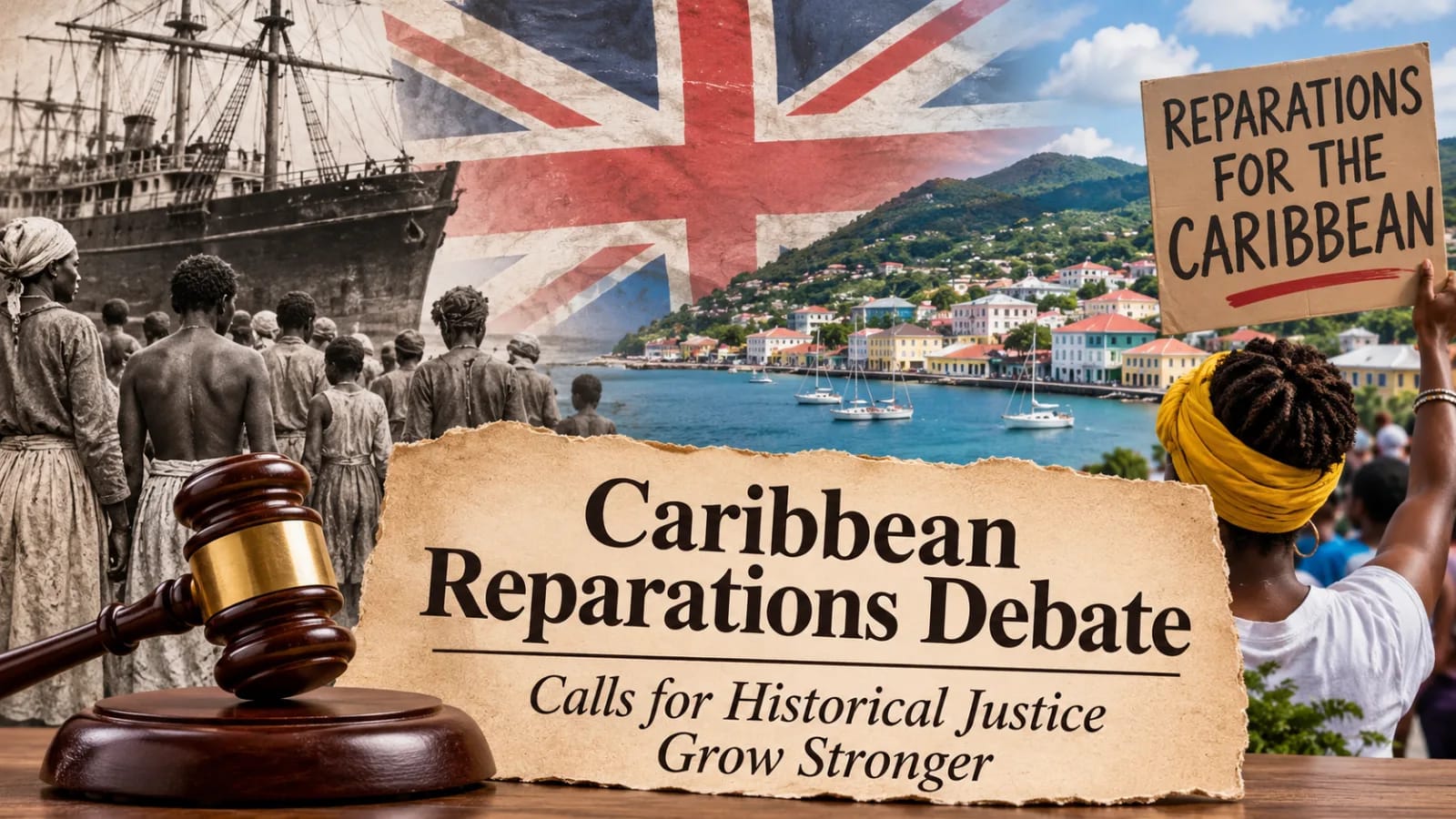
Explore the growing Caribbean reparations debate, the Trevelyan family’s apology and education fund, and calls for Britain to address slavery’s lasting legacy.
Caribbean reparations debate: The debate over slavery reparations is gaining momentum across the Caribbean as campaigners call on Britain and other former colonial powers to address the lasting consequences of the transatlantic slave trade. A recent example involving a British family that publicly apologised for its historical involvement in slavery has renewed discussions about reparatory justice, accountability, and the role of financial and educational support in addressing historical inequalities.
Caribbean Reparations Debate Gains Momentum
The growing demand for slavery reparations has become an important issue in international politics, particularly as Caribbean nations seek recognition and meaningful action from countries that benefited from colonial slavery. Campaigners argue that the historical exploitation of enslaved Africans created economic and social inequalities that continue to affect Caribbean communities today.
According to a Reuters report published on November 2, 2026, Caribbean advocates are pointing to the actions of British journalist Laura Trevelyan and her family as an example of how reparatory justice could be implemented. The family publicly apologised in Grenada in 2023 for its ancestors’ involvement in slavery and pledged £100,000 towards educational support. The initiative has reportedly helped more than 50 students through scholarships and bursaries, demonstrating how historical acknowledgment can be accompanied by practical assistance.
British Family’s Reparations Initiative Offers a Practical Example
The Trevelyan family’s initiative has attracted attention because it combines an apology for historical wrongdoing with tangible efforts to support affected communities. Laura Trevelyan’s ancestors owned plantations in Grenada, and the family worked with local historians and reparations advocates before publicly acknowledging its historical connections to slavery.
The educational fund established following the apology has supported students in Grenada, providing opportunities for education and personal development. Caribbean campaigners believe this example demonstrates how reparations can extend beyond symbolic gestures and contribute to long-term social and economic improvement.
Advocates are increasingly asking why individual families and institutions can acknowledge their historical responsibilities while governments remain reluctant to provide comparable support. The initiative has therefore become an important reference point in discussions about Britain’s responsibility for the consequences of the transatlantic slave trade.
Britain’s Historical Role in the Transatlantic Slave Trade
The transatlantic slave trade remains one of the most devastating chapters in world history. Between the 15th and 19th centuries, millions of Africans were forcibly transported across the Atlantic and subjected to slavery in the Americas and Caribbean. Britain played a significant role in this trade, transporting an estimated 3.2 million enslaved Africans across the Atlantic.
The economic benefits of slavery helped shape colonial economies, industries, and institutions. Caribbean campaigners argue that the consequences of this historical exploitation did not disappear with the abolition of slavery. They believe that inequalities in wealth, infrastructure, education, and economic development remain connected to the legacy of colonialism.
The reparations movement seeks to address these historical consequences through recognition, accountability, and measures designed to support communities affected by slavery.
Commonwealth Summit Brings Reparatory Justice Into Focus
The reparations debate is receiving renewed international attention as Commonwealth leaders gather in Antigua and Barbuda. The meeting provides an important opportunity for Caribbean governments to raise concerns about slavery, colonialism, and the continuing economic challenges faced by former colonies.
Caribbean leaders and campaigners are urging Britain to move beyond expressions of sorrow and consider meaningful forms of reparatory justice. Discussions have focused on whether historical acknowledgment should be accompanied by financial compensation, development assistance, and institutional reforms.
British Prime Minister Andy Burnham has expressed openness to a formal apology for Britain’s involvement in slavery while rejecting the idea that present-day British citizens should be held personally liable for historical wrongdoing. He has also indicated support for improving debt arrangements for vulnerable countries.
However, Caribbean campaigners argue that reparations are not simply about assigning individual guilt. Instead, they believe governments and institutions should recognise their historical roles and address the inequalities that continue to affect descendants of enslaved people.
Reparations Beyond Financial Compensation
One of the most significant developments in the reparations debate is the growing recognition that historical redress does not necessarily have to involve direct cash payments alone. Campaigners have proposed several approaches that could help Caribbean countries address longstanding development challenges.
These include investments in education and healthcare, debt relief, climate-resilient infrastructure, development finance, and economic partnerships. Such measures could help improve access to public services, strengthen local economies, and support communities facing the consequences of historical exploitation.
Climate resilience has become particularly important for Caribbean nations, many of which face rising sea levels, extreme weather events, and significant infrastructure challenges. Advocates believe that international cooperation and targeted investment could provide practical support while addressing historical inequalities.
Education is another central priority. Scholarships, bursaries, and institutional partnerships can help expand opportunities for younger generations and contribute to long-term development. The Trevelyan family’s initiative has strengthened arguments that reparatory justice can include practical programmes that directly benefit affected communities.
Why the Reparations Debate Remains Controversial
Despite growing international attention, slavery reparations remain a complicated and politically sensitive issue. Governments continue to debate questions about responsibility, compensation, eligibility, and the appropriate mechanisms for addressing historical injustices.
Supporters argue that reparations are necessary to acknowledge the lasting consequences of slavery and colonial exploitation. They believe that historical responsibility should be considered at the level of states and institutions rather than individual citizens.
Opponents, meanwhile, question whether present-day populations should bear financial responsibility for events that occurred generations ago. Others argue that development assistance and improved economic partnerships may be more practical alternatives to direct compensation.
These differing perspectives demonstrate why the reparations debate requires sustained dialogue, historical understanding, and cooperation between former colonial powers and affected communities.
The Future of Reparatory Justice in the Caribbean
The growing reparations movement reflects a broader effort to reconsider the historical relationship between Britain and Caribbean nations. Campaigners believe that meaningful progress requires more than public statements acknowledging slavery’s historical significance.
The example of the Trevelyan family has provided a practical illustration of how apology, education, and financial support can work together. While individual initiatives cannot resolve the broader consequences of centuries of slavery, they demonstrate how acknowledgment can lead to meaningful action.
As Commonwealth leaders continue discussions about historical justice, economic development, and international cooperation, the demand for reparations is likely to remain an important political issue. The outcome of these discussions could influence future relationships between Britain, Caribbean nations, and other countries affected by colonialism.
Ultimately, the Caribbean reparations debate is about recognising historical injustice while building a more equitable future. Whether through education, healthcare, debt relief, infrastructure investment, or financial compensation, campaigners are calling for concrete measures that address the enduring consequences of slavery and support future generations.
Conclusion
The growing debate over Caribbean reparations highlights the importance of historical accountability and meaningful action. The British Trevelyan family’s apology and educational fund have offered campaigners an example of how reparatory justice can move beyond symbolic recognition towards practical support.
As Caribbean leaders continue pressing Britain and other former colonial powers for accountability, the discussion is expanding to include education, healthcare, economic development, climate resilience, and debt relief. The challenge ahead is to transform historical acknowledgment into lasting measures that address inequality and strengthen the future of Caribbean communities.
Source : https://www.reuters.com/business/media-
Follow: https://thebizfrontier.com/ for global news