Carney Pushes for Closer Canada-EU Ties
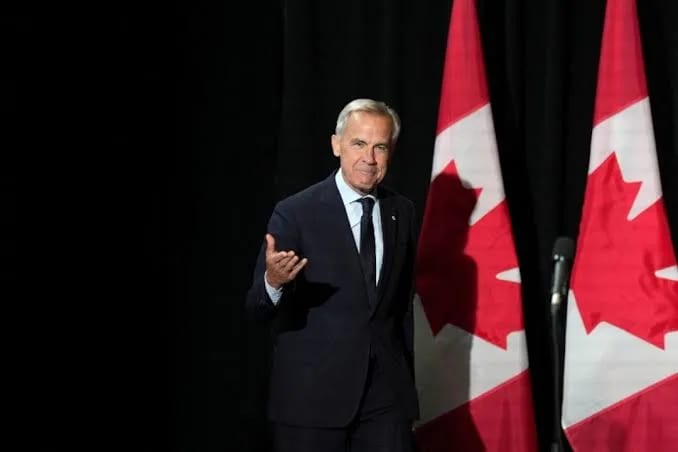
Carney pushes for closer Canada-EU ties at the Montreal summit, with trade, defence, critical minerals and business cooperation on the agenda.
Canadian Prime Minister Mark Carney is pushing for closer Canada-EU ties as Canadian and European Union leaders meet in Montreal for a two-day summit focused on trade, defence, critical minerals, research and business cooperation. The meeting comes as Canada seeks to strengthen its relationship with Europe amid ongoing trade tensions with the United States.
Canada and EU Explore a Closer Partnership
The Canada-EU summit brings together Carney, European Commission President Ursula von der Leyen and business leaders to discuss ways to deepen economic and political cooperation. The meeting follows von der Leyen’s proposal last month to explore an “associate membership” arrangement that would bring Canada closer to the European Union without granting it full membership.
The proposal gained momentum after Carney addressed the European Parliament in Strasbourg, arguing that Canada and Europe could become stronger through closer cooperation in an increasingly uncertain geopolitical environment.
However, the proposed associate membership label has faced resistance from some EU member states, including Germany.
Germany Questions the Associate Membership Proposal
Germany and several other European countries have raised concerns about the terminology, arguing that the concept could create confusion about Canada’s relationship with the bloc.
Germany’s ambassador to Canada, Matthias Lüttenberg, said some EU members were surprised by the initial announcement. He also explained that the term “associate membership” has different implications for countries such as Ukraine and Moldova, which have pursued full EU membership.
Reports indicate that the wording was removed from a draft summit statement following discussions among member states. Instead, the proposed language refers to an “ever closer association” between Canada and the European Union.
Both sides have clarified that Canada is not seeking full EU membership. Their objective is to establish a closer partnership while allowing Canada to participate in selected European programmes.
Trade, Defence and Critical Minerals on the Agenda
The Montreal summit is expected to focus on practical areas where Canada and the EU can expand cooperation. Canadian officials have indicated that discussions could lead to agreements covering several strategic sectors.
Key areas of cooperation include:
- Trade and business: Expanding commercial partnerships and improving opportunities for businesses on both sides of the Atlantic.
- Defence cooperation: Strengthening security collaboration amid changing geopolitical conditions.
- Critical minerals: Exploring opportunities to develop supply chains for strategically important resources.
- Research and innovation: Supporting scientific collaboration and joint research initiatives.
- Education: Creating more opportunities for students to study in Canada and European countries.
Officials have cautioned that a major announcement on the future relationship may not emerge immediately, with further discussions expected in the coming months.
Canada is also not expected to pay a conventional EU membership fee. Instead, the country is considering participation in selected EU programmes that offer mutual benefits.
Canada Looks to Europe Amid US Trade Tensions
Carney’s push to strengthen Canada-EU ties comes as Ottawa navigates an ongoing trade dispute with its largest trading partner, the United States.
US President Donald Trump has criticised the possibility of Canada becoming an associate member of the EU and threatened significant tariffs on European countries if he viewed the arrangement as a hostile move.
Canadian officials have stressed that closer cooperation with Europe is not intended to target the United States. Instead, Ottawa presents the initiative as an extension of existing international partnerships and an effort to broaden Canada's economic opportunities.
A stronger European relationship could help Canadian businesses explore new markets, diversify supply chains and reduce their dependence on a single major trading partner.
What the Canada-EU Summit Could Mean for Businesses
A closer Canada-EU partnership could create opportunities for companies operating in trade, technology, manufacturing, defence, clean energy and critical minerals.
Improved business cooperation may also encourage investment, cross-border research and partnerships between Canadian and European firms. Greater educational mobility could strengthen talent exchanges and support innovation in both regions.
However, the scale of these opportunities will depend on the agreements reached, the programmes Canada can access and how quickly both sides implement their plans.
Conclusion
The Montreal summit marks an important step in efforts to strengthen Canada-EU ties. While disagreements over the proposed associate membership terminology remain, both sides have expressed interest in building a closer relationship.
With trade, defence, critical minerals, research and education on the agenda, the discussions could shape a broader transatlantic partnership. For Canada, closer engagement with Europe also offers a way to diversify economic relationships as trade tensions with the United States continue.
The immediate outcome may be gradual rather than dramatic, but the summit signals a shared ambition to deepen cooperation in the years ahead.
Source : https://www.bbc.com/news/articles/cq8ezj7jylrzo
Follow The Global Biz Insider For More Such News .