ECB President Christine Lagarde Resigns: Impact on Europe’s Economy
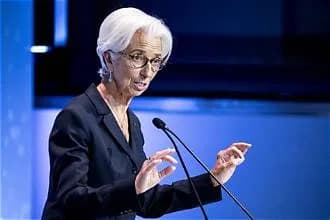
Christine Lagarde will resign as ECB president on February 7, 2027. Discover why she is stepping down early and what it means for European monetary policy.
Introduction
The European financial sector is preparing for a major leadership change following the announcement that European Central Bank (ECB) President Christine Lagarde will resign on February 7, 2027, approximately nine months before the end of her scheduled term. The announcement, made on October 29, 2026, has opened the way for European Union leaders to begin selecting her successor ahead of France’s presidential election in 2027. The decision comes at a critical time for the eurozone, as policymakers continue to address inflation, rising energy costs and economic uncertainty. Lagarde’s early departure has placed the future leadership of Europe’s central bank at the centre of financial and political discussions.
Why Is Christine Lagarde Resigning as ECB President?
According to reports, Lagarde said she wanted greater freedom to express her views and engage in discussions beyond monetary policy, responsibilities that are constrained by the political neutrality expected of the ECB president. Although speculation about her early departure had been growing, the announcement has brought the succession process into focus. Her original eight-year term was scheduled to end on October 31, 2027. By leaving earlier, Lagarde allows European leaders to move forward with the appointment process while French President Emmanuel Macron remains in office. The timing is particularly significant because France’s upcoming presidential election could change the country’s political direction and influence negotiations over senior European appointments.
European Union Begins the Search for a New ECB President
The selection of the next European Central Bank president is expected to involve complex negotiations among European Union member states. The ECB president plays a central role in setting the direction of monetary policy, communicating economic priorities and maintaining confidence in the euro. Potential successors mentioned in reporting include Klaas Knot, the former head of the Dutch central bank, and Pablo Hernández de Cos, who leads the Bank for International Settlements. However, the appointment will depend on discussions among European leaders, and no successor should be considered confirmed until the formal selection process is completed. The leadership transition is also taking place alongside other anticipated changes at the ECB, making the distribution of senior positions an important part of wider European negotiations.
What Does the ECB Do and Why Does Its Leadership Matter?
The European Central Bank is responsible for monetary policy across the eurozone, which comprises the countries that use the euro. One of its most important responsibilities is maintaining price stability by influencing interest rates and financial conditions. Changes in ECB policy can affect mortgage payments, business loans, consumer spending, investment decisions and the cost of government borrowing. The bank also plays a critical role during financial crises by supporting the stability of the financial system and helping preserve confidence in the euro. Consequently, the appointment of a new president matters not only to European governments and financial institutions but also to households and businesses that depend on stable economic conditions.
Inflation and Interest Rates Remain Major Challenges for Europe
Lagarde’s resignation comes as the eurozone faces continuing inflationary pressure and uncertainty in energy markets. According to the Associated Press report published on October 29, 2026, annual inflation stood at 3.8%, above the ECB’s 2% target, while the bank’s benchmark interest rate remained unchanged at 2.5%. Higher energy prices can increase household expenses and production costs for businesses, making inflation more difficult to control. At the same time, higher interest rates can reduce borrowing and spending, potentially slowing economic growth. The ECB must therefore balance the need to control inflation against the risk of placing additional pressure on consumers, companies and governments. These challenges will remain important regardless of who succeeds Lagarde.
How Could the Leadership Change Affect Financial Markets?
The announcement of a new ECB leadership transition could attract attention from currency traders, investors and financial institutions as they assess the bank’s future policy direction. Markets may examine the successor’s record on inflation, interest rates, financial stability and crisis management to understand whether the ECB is likely to maintain its current approach or adopt different priorities. However, a change in leadership does not automatically mean that monetary policy will change immediately. Decisions are made through the ECB’s institutional framework, including its Governing Council, rather than by the president acting alone. Investors will therefore be watching both the selection process and incoming economic data before drawing conclusions about the future direction of European markets.
Political Considerations Behind the ECB Succession
The timing of Lagarde’s resignation has also highlighted the relationship between European politics and central bank leadership. The upcoming French presidential election is expected to play an important role in the wider political environment surrounding the appointment. European leaders are seeking to advance the succession process before the election, which could alter France’s political leadership and its influence within the European Union. Although the ECB is designed to operate independently of political pressure, appointing its president requires agreement through the EU’s institutional process. This makes the selection an important exercise in balancing national interests, economic priorities and the long-term stability of the eurozone.
Christine Lagarde’s Legacy at the European Central Bank
Lagarde’s tenure has included several significant economic challenges, particularly the COVID-19 pandemic and periods of financial uncertainty across Europe. During the pandemic, the ECB introduced a large emergency bond-buying programme to maintain credit flows and support the economy. Her leadership also involved navigating inflationary pressures, changing borrowing costs and concerns about financial stability. Before becoming ECB president, Lagarde served as managing director of the International Monetary Fund, bringing extensive experience in international economic policy. Her departure will mark the end of an important chapter in the bank’s recent history, while placing greater attention on the priorities and experience of the next president.
What Happens Next for the European Economy?
In the coming months, European leaders are expected to focus on identifying Lagarde’s successor and coordinating other senior ECB appointments. Meanwhile, the central bank will continue making monetary policy decisions based on inflation, economic growth, energy prices and financial conditions. Businesses and investors will be monitoring these developments to understand how borrowing costs and economic confidence could evolve. For households, the most immediate concerns will remain the cost of living, mortgage affordability and employment prospects. Although the leadership transition is significant, its long-term economic impact will depend on the successor’s decisions, the ECB’s collective policy approach and the broader economic environment.
Conclusion
The resignation of ECB President Christine Lagarde marks a significant development for European monetary policy and financial leadership. Her planned departure on February 7, 2027, gives European Union leaders an opportunity to select a successor before France’s presidential election, while the eurozone continues to face inflationary pressure and economic uncertainty. The next president will inherit the responsibility of maintaining price stability, supporting financial confidence and responding to changing economic conditions. As the selection process develops, the ECB President Christine Lagarde resignation will remain an important topic for investors, businesses and anyone following European economic news.
Source : https://apnews.com/article/ecb-lagarde
Follow : Global Biz Insider