Europe Flight Bomb Threats Disrupt More Than 20 Flights
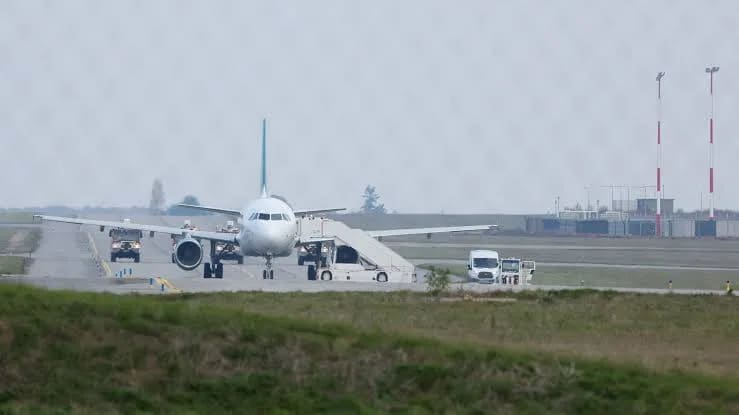
Europe flight bomb threats have disrupted more than 20 flights this week, triggering emergency landings, diversions and fighter jet escorts.
Europe flight bomb threats have disrupted more than 20 passenger flights across the continent this week, triggering emergency security procedures, flight diversions and military fighter jet escorts. The incidents have affected several major airlines and airports, raising concerns about aviation security and the possibility of coordinated attempts to disrupt European air travel.
According to reports, the latest wave of threats intensified on Thursday, November 5, when more than a dozen flights were affected in different European countries. Several aircraft were diverted to alternative airports, while others underwent extensive security inspections after receiving warnings about suspected explosive devices. Authorities have so far reported no explosives or suspicious materials aboard the inspected aircraft, indicating that the threats appear to be hoaxes.
Multiple European Countries Affected by Bomb Threats
The incidents have been reported across several countries, including France, Italy, Bulgaria, Spain, Denmark, Poland, Romania, Ireland, the United Kingdom and the Czech Republic.
Airports in major cities such as Rome, Milan, Prague, Sofia, Warsaw and Copenhagen experienced disruptions as authorities responded to the warnings. Some flights were forced to change their destinations, while others were temporarily grounded or delayed to allow security teams to conduct inspections.
On Thursday, four aircraft arriving in Prague were reportedly subjected to bomb threat alerts. Czech police confirmed that security inspections were carried out, but no explosives were discovered.
In another incident, three Ryanair flights heading towards Sofia, Bulgaria, from Copenhagen, Madrid and London Stansted received bomb threats. Two aircraft landed safely at Sofia Airport, while the flight from London was diverted to Plovdiv Airport.
Dublin-to-Rome Flight Diverted to France
One of the most significant incidents involved an Aer Lingus flight travelling from Dublin to Rome. Following a suspected bomb threat, the aircraft was diverted to Évreux airbase in Normandy, France.
French authorities deployed military fighter jets to intercept and escort the aircraft to the military facility. The plane landed safely, and all 151 passengers and six crew members were moved to safety.
Bomb disposal specialists were subsequently deployed to examine the aircraft. The incident prompted additional security measures as authorities worked to establish the credibility and origin of the threat.
Meanwhile, a Finnair flight travelling from Helsinki to Rome also received a bomb threat. Italian Air Force fighter jets escorted the aircraft before it landed safely at Rome's Leonardo da Vinci International Airport. Security inspections reportedly found no explosives.
Airlines and Airports Face Growing Security Challenges
Several major airlines, including Ryanair, Wizz Air, Finnair, Aer Lingus, LOT Polish Airlines, Iberia and Air Europa, have been affected by the incidents.
The repeated threats have created operational challenges for airlines and airport authorities. Flight diversions, emergency landings, aircraft inspections and passenger evacuations require coordination between airline operators, airport security teams, police departments and military authorities.
Although the threats have not resulted in any confirmed explosive discoveries, aviation authorities cannot ignore such warnings. Every report must be assessed and handled according to established security procedures to protect passengers and airline employees.
The disruptions have also raised concerns about the potential financial consequences for airlines, including additional operational expenses, scheduling delays and passenger inconvenience.
Who Is Behind the Europe Flight Bomb Threats?
The identity of those responsible for the threats remains unclear. Authorities have not officially identified any individual, organisation or country as being behind the incidents.
Some of the threats reportedly arrived through anonymous emails sent to airports and aviation-related organisations. In Italy, an email claiming to represent an anti-feminist group known as Male State reportedly warned of explosive devices aboard flights arriving from Helsinki and Dublin.
However, the group's founder denied involvement, and investigators have not independently established who sent the messages.
Security experts have also raised the possibility that the incidents could be part of a wider coordinated campaign designed to disrupt essential infrastructure and undermine public confidence. Nevertheless, there is currently no confirmed evidence connecting all the threats.
European Union Transport Commissioner Apostolos Tzitzikostas said it was too early to determine whether the reported incidents were connected. He also stressed that threats against civilians were unacceptable.
What Does This Mean for European Travellers?
The latest wave of Europe flight bomb threats has highlighted the security challenges facing the aviation industry. Although the reported incidents have so far produced no confirmed explosive discoveries, the repeated alerts demonstrate how quickly false security warnings can disrupt international travel.
Passengers travelling through affected European airports may experience delays, additional security checks, flight diversions or last-minute schedule changes.
Travellers are advised to monitor airline notifications, check flight status before leaving for the airport and follow instructions issued by airport authorities.
Airlines and security agencies are continuing to respond to the incidents, while investigations into the origin of the threats remain ongoing.
The coming days will be important in determining whether the incidents represent unrelated hoaxes or a broader attempt to disrupt European aviation operations.
Source : https://edition.cnn.com/2026/11/05/europe/europe-bomb-threat-intl
Follow The Global Biz Insider For More Such News.