Iran's Chief Negotiator Says Americans Voted 'No to War'
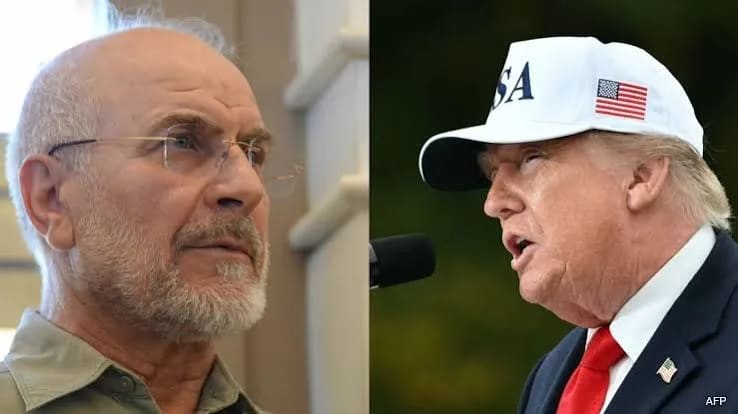
Iran's chief negotiator says Americans voted 'no to war' after Trump's Republican midterm defeat, as tensions over the Iran conflict and Strait of Hormuz contin
Iran's chief negotiator, Mohammed Bagher Ghalibaf, has claimed that American voters have delivered a clear message against war following a major setback for US President Donald Trump's Republican Party in the midterm elections. His comments have intensified the political debate surrounding the ongoing conflict between the United States, Israel and Iran.
Ghalibaf, who also serves as the speaker of Iran's parliament, shared his reaction on social media platform X, saying that Iran endorsed the message sent by American voters.
"We endorse this message," Ghalibaf wrote, referring to the statement that Americans had voted "NO TO WAR". He also warned that if the US government ignored public opinion and continued pursuing its current approach, Iran's response would be severe.
His remarks come at a critical moment when diplomatic efforts to end the conflict remain stalled and tensions across the Middle East continue to threaten regional stability.
Trump Acknowledges Iran War Affected Republican Election Results
US President Donald Trump acknowledged that the conflict with Iran and the resulting increase in petrol prices may have contributed to the poor performance of Republican candidates in the midterm elections.
Speaking in an interview with Fox News, Trump said that Iran was partly responsible for the election outcome. He suggested that although many Americans supported his actions against Iran, rising fuel costs had created difficulties for voters.
Trump maintained that he did not regret launching the joint military operation with Israel against Iran in February.
In a separate interview with CBS News, the US president said the conflict would end "when I say it ends", indicating that Washington had not yet committed to a definite timeline for ending military operations.
The election setback has added domestic political pressure on the Trump administration as it continues to deal with the economic and diplomatic consequences of the conflict.
Iran's Supreme Leader Rejects Expectations of US Policy Change
Despite Ghalibaf's interpretation of the election results, Iran's Supreme Leader Mojtaba Khamenei has expressed little expectation that the outcome will lead to a significant change in American policy towards Tehran.
In a statement released on Wednesday, Khamenei said that anyone expecting a shift in Washington's hostile approach towards Iran was seriously mistaken.
His statement reflects Tehran's continued distrust of the US administration, even as both countries explore possibilities for ending the conflict through indirect negotiations.
Khamenei has not appeared publicly since the beginning of the Iran war, making his written statements an important source of information about Iran's official position.
Strait of Hormuz Faces Growing Security Concerns
Meanwhile, the Strait of Hormuz has emerged as one of the most sensitive locations in the ongoing conflict.
Iran's Islamic Revolutionary Guard Corps (IRGC) claimed that four oil tankers caught fire after hitting naval sea mines in the strategic waterway. According to Iran's semi-official Tasnim news agency, two vessels were reportedly still burning, while two additional tankers were intercepted for attempting to use a prohibited southern route.
However, BBC Verify said it had found no evidence confirming that four tankers had been destroyed.
In another incident, the UK Maritime Trade Operations (UKMTO) centre reported that a tanker was struck by two unidentified projectiles approximately 14 nautical miles north-east of Limah, near Oman's Musandam Peninsula. No casualties were reported.
An earlier attack north-east of Limah also killed an Indian crew member aboard a traditional wooden sailing vessel known as a dhow. Omani authorities rescued 13 other crew members.
The incidents have raised concerns about the safety of commercial shipping and the potential disruption of international energy supplies.
Iran Claims Another US Drone Was Shot Down
The IRGC also claimed that its forces had shot down another American MQ-9 drone over the Strait of Hormuz.
This followed a similar claim earlier in the week. US officials previously confirmed that American forces had carried out limited strikes on Iran's Qeshm Island after Iranian forces allegedly fired on a US aircraft.
These developments highlight the growing risk of further military confrontation between Washington and Tehran, despite continuing diplomatic efforts.
Peace Negotiations Between Washington and Tehran Remain Stalled
Diplomatic negotiations aimed at ending the conflict have remained largely unsuccessful for months.
Iranian President Masoud Pezeshkian has maintained that his government wants to resolve the crisis through dialogue. He warned that neither country would benefit if the conflict resumed on a larger scale.
Iranian Foreign Ministry spokesperson Esmaeil Baqai also said that indirect negotiations, mediated by Qatar, were based on a seven-point proposal submitted by Tehran in September.
According to Baqai, the proposal had since been shortened to make implementation possible within two days.
Iran has also indicated that its government has received greater authority from the Supreme Leader to negotiate issues that were previously considered off-limits.
However, disagreements over the Strait of Hormuz, military security and control of shipping routes remain major obstacles to reaching a lasting agreement.
Strait of Hormuz Crisis Could Affect Global Energy Markets
The Strait of Hormuz is one of the world's most important maritime energy routes, normally handling approximately one-fifth of global oil and gas shipments.
The waterway was effectively closed following the outbreak of the conflict because of Iranian missile and drone attacks on commercial vessels and the US naval blockade.
Although Washington and Tehran reached a preliminary understanding in June to end the conflict and reopen the strait, the arrangement collapsed within weeks after attacks on shipping resumed and the US reinstated its blockade.
Iran has continued to insist on retaining a degree of control over the strategic waterway. Meanwhile, the US military has been providing protection to tankers transporting oil through the strait to maintain energy exports from Gulf Arab countries.
What Happens Next?
Ghalibaf's comments suggest that Tehran sees the Republican election setback as a potential indication of growing domestic pressure on the Trump administration to reconsider its approach towards the Iran conflict.
However, Iran's leadership has made clear that it does not expect an immediate change in American foreign policy.
With peace negotiations stalled, shipping incidents continuing and military tensions remaining high, the coming weeks could prove important for diplomatic efforts and global energy security.
For now, both Washington and Tehran face the challenge of preventing another escalation while addressing their major political and security disagreements.
Source : https://www.bbc.com/news/articles/c6d934npl9y8o
Follow The Global Biz Insider for more such news articles.