Israel Election 2026: Netanyahu’s Future at Stake
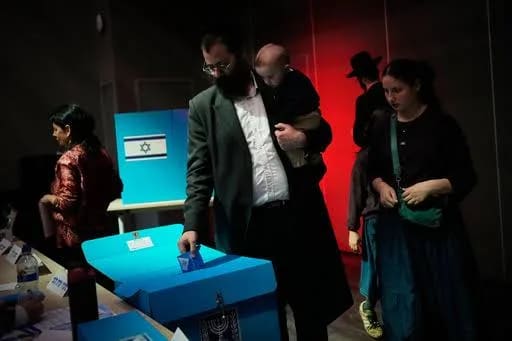
Israel Election 2026 puts Benjamin Netanyahu’s leadership at stake as voters choose a new parliament amid political uncertainty.
Israel Election 2026 is a major political test for Prime Minister Benjamin Netanyahu, whose hold on power is at stake as Israeli voters head to the polls. The parliamentary election is the first since the Hamas attack on October 7, 2023, which deeply affected Israel and contributed to widespread instability across the Middle East.
Centrist political rivals are seeking to challenge Netanyahu’s leadership and bring a new direction to the country. However, the final outcome may not immediately determine who becomes prime minister, as coalition negotiations could play a decisive role in shaping the next government.
The election comes at a critical moment for Israeli politics, with voters weighing the government’s record, national security concerns and the country’s future direction.
When Will Israel Election 2026 Results Be Known?
The first indications of the election outcome are expected after polling stations close. Voting is scheduled to begin at 7 a.m. local time and end at 10 p.m., after which Israeli television channels are expected to publish exit polls.
These exit polls will provide an early indication of how the major parties have performed. However, they will not constitute the official results, and the final distribution of parliamentary seats will depend on the counting process.
A clearer picture could emerge within hours if one political bloc appears to have a strong advantage. If the results are closely contested, however, it may take considerably longer to determine which parties can assemble a governing majority.
The final tally is expected by October 30, while the official results are scheduled for publication on November 4, according to the supplied report.
Why Is the Israeli Election So Complicated?
Israel’s parliamentary system makes it difficult for a single political party to secure power independently. The country’s parliament, known as the Knesset, has 120 seats, and elections are conducted through a proportional representation system.
Under this system, parliamentary seats are allocated according to the national vote share received by political parties. Parties must secure at least 3.25% of the national vote to qualify for representation.
Around a dozen parties are considered potential contenders to cross this electoral threshold. Their performance will influence the final seat distribution and determine which political alliances are mathematically possible.
As a result, winning the largest share of votes does not automatically guarantee the premiership. Political parties must also build sufficient parliamentary support to establish a government.
Smaller parties can become particularly influential when neither major political bloc secures enough seats to govern independently. Their support may determine which candidate ultimately becomes prime minister.
Benjamin Netanyahu’s Leadership Faces a Key Test
For Benjamin Netanyahu, the election represents an important test of political support following the Hamas attack of October 7, 2023, and the regional turmoil that followed.
Netanyahu’s political future will depend not only on his party’s performance but also on the ability of his allies to secure enough seats to form a governing coalition.
Centrist rivals are presenting themselves as an alternative to the current leadership, promising a different political direction. Their success will depend on whether they can unite enough parties behind a common candidate and agree on the priorities of a future administration.
The election result could influence Israel’s domestic policy, security strategy and approach to the continuing challenges across the Middle East.
However, the final political outcome will remain uncertain until the parliamentary numbers and coalition possibilities become clearer.
What Happens After the Election Results?
Once the final vote tally is available, Israeli President Isaac Herzog will consult political party leaders about their preferred candidate for prime minister.
The president will then nominate the candidate considered most likely to secure the support needed to form a government.
The nominee can have up to 42 days to assemble a governing coalition. During this period, parties negotiate over policy priorities, ministerial positions and the terms of their cooperation.
Because no single party has historically secured an outright majority in Israel’s parliament, coalition-building is a central part of the country’s political process.
Even parties with relatively few seats can gain significant influence if their support is essential to reaching a parliamentary majority. This can make negotiations lengthy and politically complex.
If the first nominee fails to form a government, another candidate may be given an opportunity. If no viable government can be established, another election may be called, with the existing cabinet continuing in a caretaker capacity.
Coalition Negotiations Could Decide Israel’s Next Government
The election results will provide the initial picture of voter preferences, but the subsequent negotiations could prove equally important.
Political parties will need to assess whether their interests align closely enough to support a common government. Differences over security, domestic policy and the distribution of political power could complicate these discussions.
If neither major political bloc secures sufficient support, smaller parties could emerge as decisive partners. Their demands may influence the composition and policy agenda of the next administration.
This means that the political uncertainty surrounding Israel Election 2026 may continue even after voters have cast their ballots and the initial results have been announced.
What Israel Election 2026 Means for the Middle East
Israel’s political direction has implications beyond its borders. Changes in leadership or government policy could influence regional diplomacy, security decisions and relations with international partners.
The election is taking place against the backdrop of the instability that followed the October 2023 Hamas attack and the wider conflict affecting the Middle East.
International observers will therefore be watching not only the vote count but also the formation of the next government and its policy priorities.
A change in leadership could signal a shift in political direction, while a Netanyahu-led coalition would indicate continuity in government leadership. In either scenario, the composition of the governing alliance will be important in understanding the policies likely to follow.
Conclusion
Israel Election 2026 could prove pivotal for Benjamin Netanyahu and the country’s political future. Although exit polls and preliminary results may provide an early indication of the outcome, the final government will depend on parliamentary seat distribution and coalition negotiations.
With 120 Knesset seats at stake and several parties competing for representation, even small differences in the final tally could influence the balance of power.
The coming days will be crucial in determining whether Netanyahu retains power or centrist rivals succeed in building an alternative government. Until the coalition process is resolved, Israel’s political future will remain uncertain.
Source : https://sl1nk.com/588ce28
Follow The Global Insider for the latest international news, political developments and global affairs.