Israel President Herzog Begins Government Talks Amid Election Deadlock
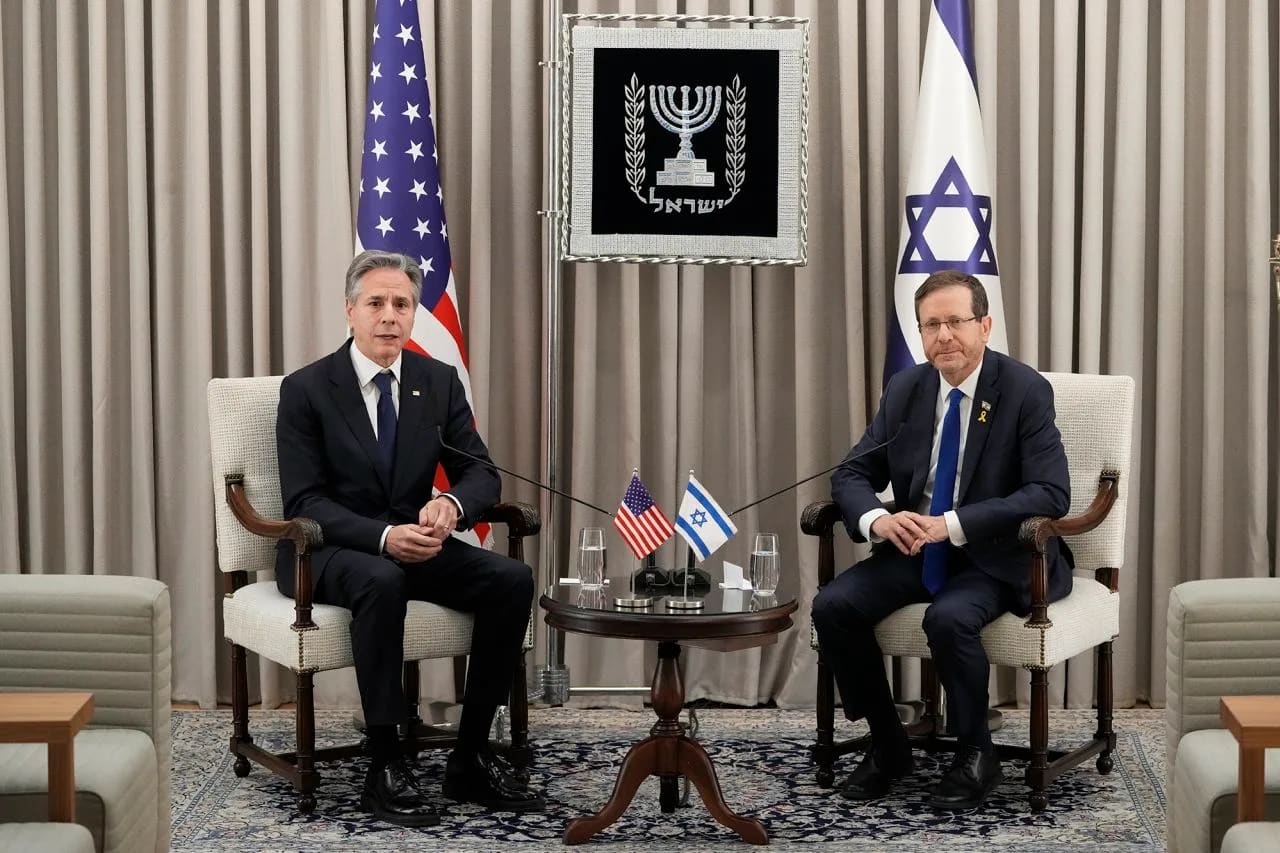
Israeli President Isaac Herzog begins consultations to form a new government after the election deadlock between Benjamin Netanyahu and opposition leader Gadi
Israel is facing renewed political uncertainty after its October 27, 2026, parliamentary election failed to produce a clear majority for either of the major political blocs. President Isaac Herzog has begun consultations with elected political parties to determine who should receive the opportunity to form the country's next government. The election has intensified political divisions, leaving Israel's leadership facing difficult negotiations and the possibility of another election if coalition talks fail.
The election results have placed Prime Minister Benjamin Netanyahu's political bloc and the opposition alliance led by Gadi Eisenkot in a challenging position. Netanyahu's bloc secured 53 seats, while the opposition bloc obtained 48 seats in the 120-member Knesset. Neither group has independently reached the 61-seat majority required to establish a government. Meanwhile, Arab-led political parties secured a combined 19 seats, giving them a potentially decisive role in determining the next government.
President Isaac Herzog's Role in Government Formation
Israeli President Isaac Herzog plays a crucial constitutional role in the government formation process. Although the presidency is largely ceremonial, the president has the authority to designate the political leader who will receive the first opportunity to form a governing coalition. Herzog must consult representatives of the elected parliamentary factions before making his decision.
On November 4, Herzog began consultations with representatives of the political parties elected to the 26th Knesset. His decision to meet smaller parties first reflects an effort to explore different coalition possibilities before engaging with the largest political factions. The consultations are intended to identify the candidate with the strongest chance of securing parliamentary support and forming a stable government.
Under Israeli law, the candidate selected by the president generally receives 28 days to form a government, with the possibility of an extension of up to 14 additional days. If the initial attempt fails, another candidate may receive the opportunity to negotiate a coalition. However, repeated failures could eventually lead to another parliamentary election.
Benjamin Netanyahu and Gadi Eisenkot Face Coalition Challenges
The political contest between Benjamin Netanyahu and Gadi Eisenkot remains central to Israel's government formation process. Netanyahu's Likud party continues to hold a significant position in Israeli politics, but the loss of its previous parliamentary majority has complicated its efforts to remain in power.
Eisenkot, a former military chief and opposition leader, has emerged as a major alternative to Netanyahu. His political alliance is attempting to bring together opposition parties and explore possible cooperation with Arab-led factions. However, disagreements over whether Arab political parties should participate in or support a coalition remain a significant obstacle.
The situation has created several possible political outcomes, including a Netanyahu-led government, an opposition-led coalition, or a broader unity government involving political rivals. Each option presents considerable challenges, particularly because political leaders have made competing promises to their supporters.
Arab Political Parties Become Key Players
The strong performance of Arab-led political parties has added another dimension to Israel's post-election political negotiations. Their combined 19 seats could prove important in determining which political bloc receives sufficient parliamentary support to form a government.
However, cooperation with Arab political parties remains controversial among several Israeli political groups. While some opposition leaders may consider their parliamentary support essential, others have expressed reservations about forming a coalition that depends on Arab parties.
This disagreement highlights the broader political divisions within Israel and demonstrates how minority parliamentary representation can become influential during closely contested elections.
Political Deadlock Raises the Possibility of Another Election
Israel's political deadlock has increased concerns about prolonged coalition negotiations and another election. If neither Netanyahu nor Eisenkot can secure sufficient support, the country could face an extended period of political uncertainty.
During this process, the outgoing administration continues to function as a caretaker government. Although caretaker governments retain legal authority, they are generally expected to exercise restraint when making major political decisions because they lack a newly established parliamentary mandate.
The possibility of another election could create additional political and economic uncertainty. Israel's leaders are therefore under pressure to reach agreements that would allow the country to establish a functioning government without returning voters to the polls.
What Israel's Government Formation Process Means for the Country
The outcome of Israel's government formation process could influence the country's domestic policies, diplomatic relationships, security decisions, and regional political strategy. With Israel facing significant security and international challenges, the establishment of a stable government remains an important priority.
President Herzog's consultations are therefore more than a procedural step. They represent an opportunity for political leaders to negotiate, reconsider alliances, and determine whether a workable parliamentary majority can emerge from the divided election results.
The coming weeks will be important in determining Israel's political direction. Whether the country establishes a new coalition or moves toward another election, the outcome will shape its leadership and political landscape in the months ahead.
Conclusion
Israel's 2026 election has created a challenging political situation in which neither Benjamin Netanyahu nor Gadi Eisenkot has secured an independent parliamentary majority. President Isaac Herzog's consultations with political factions are a critical step toward resolving the deadlock and identifying a candidate capable of forming the next government.
With Arab-led parties holding potentially decisive parliamentary seats and coalition negotiations remaining complicated, Israel's political future depends on the ability of its leaders to reach agreements. The government formation process will determine whether the country can achieve political stability or face another election in the near future.
Source : https://www.nytimes.com/2026/11/04/
Follow: https://globalbizinsider.com/