Japan’s Foreign Policy Shift: Takaichi, Trump and the International Criminal Court
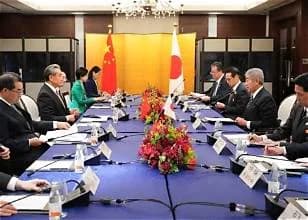
Explore Japan’s evolving foreign policy under Sanae Takaichi, its relationship with Donald Trump, and the diplomatic implications
Japan has reaffirmed its commitment to international law and global justice following growing tensions between the United States and the International Criminal Court (ICC). Japanese Prime Minister Sanae Takaichi recently welcomed ICC President Tomoko Akane to Tokyo, signalling that Japan intends to continue supporting the international judicial institution despite pressure from the administration of US President Donald Trump.
The meeting on November 24, 2026, highlighted an important difference in foreign policy priorities between two close allies, Japan and the United States. While Washington has intensified its criticism and sanctions against the ICC, Tokyo has chosen to strengthen its financial and diplomatic support for the organisation. This development has attracted international attention because Japan remains an important American security partner while also being one of the court's largest financial contributors.
Japan Accelerates Financial Support for the International Criminal Court
One of the most significant announcements following the meeting was Japan's decision to pay its full financial contribution to the ICC for 2027 by the end of December 2026. Normally, Japan makes its annual contribution around April or later. The decision to advance the payment reflects Tokyo's intention to help the court manage financial difficulties arising from US sanctions.
Japan is currently the ICC's largest financial contributor. In 2026, the country provided approximately 4.6 billion yen, equivalent to around $28.8 million, representing nearly 15 percent of the court's annual budget. This financial assistance is particularly important as the organisation faces uncertainty over its banking access, operational expenses and ability to pay employees.
ICC President Tomoko Akane expressed gratitude for Japan's commitment, explaining that the advance payment would help the institution maintain its operations and protect its staff salaries. Her request for early funding came amid concerns that additional sanctions could create serious financial obstacles for the court.
Donald Trump's Administration and Growing Pressure on the ICC
The growing disagreement between Japan and the United States is connected to the Trump administration's approach towards international judicial institutions. The United States has opposed certain ICC investigations involving American personnel and its allies. Washington has also criticised the court's exercise of jurisdiction in politically sensitive international cases.
In October 2026, the Trump administration imposed sanctions targeting the International Criminal Court itself, following earlier measures against individual court officials, including its president, Tomoko Akane. These restrictions have increased concerns about the institution's ability to conduct investigations and carry out its responsibilities without external pressure.
The United States is not a member of the ICC, whereas Japan is a member state and has consistently supported its work. This difference creates a diplomatic challenge for Tokyo, which must balance its close relationship with Washington against its commitment to international law and multilateral cooperation.
Sanae Takaichi's Diplomatic Balancing Act
Prime Minister Sanae Takaichi faces an important foreign policy challenge as Japan attempts to maintain strong relations with the United States while protecting its independent position on international legal institutions. The Japan-US alliance remains central to Tokyo's national security strategy, particularly because of regional security concerns involving China, North Korea and the wider Indo-Pacific region.
However, supporting the ICC is also an important part of Japan's commitment to a rules-based international order. By promising early financial assistance, Takaichi has demonstrated that Japan's diplomatic priorities do not always have to match those of its closest security partner.
Following her meeting with Akane, Takaichi reaffirmed that Japan would continue supporting the ICC so that it could fulfil its intended role in strengthening the rule of law. Her position suggests that Tokyo wants to maintain its credibility as a supporter of international institutions while avoiding unnecessary damage to its relationship with Washington.
Why the International Criminal Court Matters
The International Criminal Court, headquartered in The Hague, Netherlands, was established under the Rome Statute and began operating in 2002. Its primary responsibility is to investigate and prosecute individuals accused of serious international crimes, including genocide, war crimes, crimes against humanity and the crime of aggression.
The ICC plays an important role in promoting accountability when national judicial systems are unwilling or unable to genuinely investigate and prosecute such crimes. It provides an international legal mechanism through which individuals, including political and military leaders, can potentially be held responsible for serious violations of international law.
Unlike national courts, the ICC operates through international cooperation and depends heavily on its member states for financial contributions, arrests and enforcement of its decisions. Therefore, financial pressure and political interference can create significant difficulties for its operations.
Japan's decision to accelerate its contribution is consequently more than a financial announcement. It represents diplomatic support for the continued functioning of an international institution at a time when its independence and resources are under pressure.
Japan's Position Creates a Difference Within the US-Japan Alliance
The latest development highlights the complicated relationship between Japan and the United States. Both countries maintain close cooperation on defence, trade, regional security and diplomatic matters. Nevertheless, their positions on the International Criminal Court demonstrate that strategic partnerships do not necessarily require complete agreement on every international issue.
Japan has traditionally supported multilateral institutions and international cooperation. Its decision to maintain financial support for the ICC reinforces this approach, even when it differs from Washington's position.
For the Takaichi government, the challenge will be to preserve the strength of the Japan-US alliance without compromising its commitment to international legal principles. This balancing act could become increasingly important as global disagreements over sovereignty, international jurisdiction and accountability continue to grow.
Global Implications of Japan's Support for the ICC
Japan's financial commitment could have wider implications for the future of international justice. As one of the court's biggest contributors, its decision to provide funding ahead of schedule may help the ICC manage immediate financial uncertainty and continue essential operations.
It could also encourage other member states to reconsider their financial and diplomatic support for the institution. At a time when international organisations face increasing political pressure, contributions from major economies can play an important role in maintaining institutional stability.
The situation also raises broader questions about the relationship between powerful countries and international legal institutions. If financial restrictions and political disagreements significantly weaken international courts, their ability to investigate serious crimes and promote accountability could be affected.
Japan's position therefore carries significance beyond its immediate relationship with the United States. It reflects the continuing debate over whether international law should remain independent of the political interests of powerful governments.
Conclusion
Japan's decision to accelerate its financial contribution to the International Criminal Court represents a significant moment in its foreign policy under Prime Minister Sanae Takaichi. Despite maintaining a close security alliance with the United States, Japan has chosen to reaffirm its support for an international institution facing increasing pressure from the Trump administration.
The development demonstrates the challenges faced by countries attempting to balance strategic partnerships with their commitment to international law and multilateral cooperation. As tensions surrounding the ICC continue, Japan's actions could become an important example of how major international actors respond when global justice institutions face political and financial uncertainty.
The future of the ICC will depend not only on its legal authority but also on the willingness of its member states to protect its independence and provide the resources necessary for its operations.
Source: https://www.nytimes.com/2026/11/24/world/asia/ja
Follow: https://globalbizinsider.com/