Kim Jong Un Changes North Korea's National Flag After 78 Years
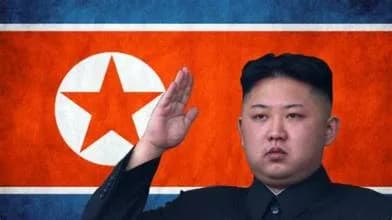
North Korea changes its national flag proportions for the first time since 1948 as Kim Jong Un seeks to establish a distinct national identity.
North Korea has made a significant change to its national flag for the first time in nearly eight decades, reflecting leader Kim Jong Un’s efforts to reshape the country's national identity and distinguish his leadership from that of previous generations. The constitutional revision, made public on November 13, 2026, changes the proportions of the country's iconic flag while retaining its familiar red, white and blue design. The move is attracting international attention because national symbols have long played an important role in North Korea's political identity and state ideology.
North Korea Revises Its National Flag After 78 Years
According to the revised North Korean Constitution, the national flag's height-to-width ratio has changed from 1:2 to 1:1.65. This adjustment makes the flag shorter in width than its previous version, marking the first official change to its proportions since North Korea was established in 1948. The updated specifications were included in Article 166 of the revised constitution, published through the country's official external information website, Naenara.
Although the proportions have changed, the flag retains its recognizable design elements. It still features a broad red stripe in the centre, narrow white stripes, blue stripes along the upper and lower sections, and a red five-pointed star enclosed within a white circle. The changes demonstrate an effort to modernize the country's national symbolism without completely abandoning the visual identity established during its early years.
The Historical Significance of North Korea's Flag
North Korea's national flag was introduced in 1948, during the establishment of the Democratic People's Republic of Korea. Its original design emerged during the period of strong Soviet influence following the end of Japanese colonial rule on the Korean Peninsula in 1945. Over the decades, the flag became an important symbol of the country's political system, revolutionary history and national identity.
The red central stripe traditionally represents the sacrifices made by revolutionary fighters during the struggle against Japanese colonial rule. The white circle and stripes symbolize loyalty to the country's leadership and ruling Workers' Party of Korea, while the blue stripes represent independence, peace, friendship and national sovereignty. The red star remains an important symbol associated with the country's socialist political ideology.
For generations, the flag has been closely connected with North Korea's founding leadership and official historical narrative. Changing its proportions therefore carries significance beyond a simple visual adjustment.
Kim Jong Un's Efforts to Establish a Distinct National Identity
The flag revision is widely viewed as part of Kim Jong Un's broader efforts to establish a political identity associated with his own leadership. Since succeeding his father, Kim Jong Il, in 2011, Kim has continued to strengthen his authority while gradually reshaping aspects of the country's political messaging and national symbolism.
The North Korean leader has increasingly emphasized a separate national identity rather than the historical idea of a unified Korean nation. One of the most significant developments has been his declaration that North Korea and South Korea should be regarded as two separate and hostile states rather than countries working toward eventual reunification.
This shift has influenced several aspects of North Korea's political and cultural messaging. Changes to constitutional language, national symbols and official references to the Korean Peninsula suggest a broader effort to redefine how the country presents itself domestically and internationally.
Changes to National Symbols Reflect a Shift in Political Priorities
The national flag revision follows other changes to North Korea's national identity under Kim Jong Un. In 2024, the country revised elements of its national anthem, replacing a traditional reference to the entire Korean Peninsula with wording that no longer carries the same geographical association with a unified Korea.
Constitutional changes have also reinforced the country's increasingly distant relationship with South Korea. These developments reflect a significant departure from the traditional political narrative that emphasized eventual reunification as a national objective.
By adjusting the flag while maintaining its recognizable features, North Korea appears to be balancing historical continuity with a new political direction. The changes allow the leadership to retain important elements of the country's revolutionary past while establishing symbols more closely associated with the current administration.
What the Flag Change Means for North Korea's Future
The modification of North Korea's national flag may appear relatively small compared with the country's military, diplomatic and economic developments. However, national symbols often communicate important political messages, particularly in countries where state ideology plays a central role in public life.
Kim Jong Un's decision to revise a symbol that remained largely unchanged for 78 years highlights the importance his government places on shaping national identity. It also reflects the leadership's desire to establish a distinct political legacy while maintaining selected traditions associated with previous rulers.
International observers will likely continue monitoring how these symbolic changes connect with North Korea's wider domestic policies and foreign relations. Although the flag's basic design remains intact, its revised proportions represent another notable development in the country's evolving political identity.
Conclusion
North Korea's decision to change its national flag proportions for the first time since 1948 represents more than a minor design update. Under Kim Jong Un, the country is gradually redefining its national identity, political messaging and relationship with its historical past. From constitutional revisions to changes in national symbols, these developments indicate an effort to establish a distinct identity for the Kim Jong Un era.
While the familiar red, white and blue design continues to represent North Korea, the updated flag serves as another reminder of the country's changing political priorities and the leadership's efforts to shape its future direction.
Source: https://www.wsj.com/world/asia/kim-jong-u
Follow: https://globalbizinsider.com/