LPG Tanker Sank Off Bulgaria After Four Strikes
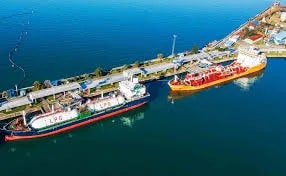
The LPG tanker that sank off Bulgaria was hit by four projectiles, officials say. All 19 crew members were rescued from the Black Sea.
The LPG tanker that sank off Bulgaria in the Black Sea was reportedly struck four times by projectiles before going down, according to Bulgarian officials and maritime security sources. The incident has raised fresh concerns about the safety of commercial shipping routes in the Black Sea amid growing tensions linked to the Russia-Ukraine conflict.
The Liberian-flagged vessel, named Gas Husky, was transporting approximately 3,400 metric tonnes of liquefied petroleum gas (LPG) from Egypt to Romania when it issued a distress signal on Tuesday, November 17. The tanker subsequently sank around 50 miles (80 kilometres) east of the Bulgarian coastal town of Byala.
According to officials, all 19 crew members aboard the vessel were successfully rescued following a search and rescue operation.
Four Projectiles Reportedly Struck the Gas Husky
Varna regional governor Mario Smarkov confirmed that the tanker had sustained four strikes. However, authorities have not established the exact type of weapons or drones involved in the incident.
Two maritime security sources indicated that the vessel was hit by an unmanned system. The information has strengthened concerns about the increasing use of unmanned technology in attacks targeting commercial vessels operating in the Black Sea.
The Greece-based company managing the tanker had not immediately responded to requests for comment, according to reports.
Although the vessel sank, the successful rescue of its entire crew prevented further loss of life in the incident.
Second Ship Sinks Near Bulgaria Within Two Days
The sinking of the Gas Husky comes just one day after another commercial vessel carrying wheat sank in the same general maritime area.
The consecutive incidents have increased concerns about the vulnerability of international shipping routes around Bulgaria and Romania.
According to maritime security firm Diaplous, at least 17 vessels have been attacked off the Bulgarian and Romanian coasts since mid-July.
The incidents form part of a broader pattern of attacks on commercial shipping in the Black Sea, where maritime routes have become increasingly exposed to military operations and security threats.
Growing Concerns Over Russia-Ukraine Conflict
The latest tanker incident has intensified concerns that the Russia-Ukraine conflict could create wider security challenges for countries bordering the Black Sea.
Bulgaria and Romania, both members of NATO, are particularly important to regional maritime security. Their coastal waters are also strategically significant for international trade and the movement of Ukrainian agricultural exports.
Ukraine is one of the world's major grain exporters, and its Black Sea shipping routes play an important role in transporting agricultural products to international markets.
Repeated attacks on vessels and port infrastructure have created additional risks for shipping companies, maritime workers and international trade operators.
However, Bulgarian and Romanian authorities have generally been cautious about directly attributing responsibility for attacks near their coastlines.
Some officials and maritime security experts have suggested possible Russian involvement in certain incidents, an allegation Moscow denies. Russia has also accused Ukraine of targeting Russian vessels in other parts of the Black Sea.
Black Sea Shipping Security Faces Increasing Pressure
The latest sinking highlights the growing challenges facing commercial shipping operations in the Black Sea.
Attacks involving drones and other unmanned systems can create serious risks for merchant vessels transporting essential commodities, including fuel, food and industrial materials.
For shipping companies, the increasing security threats could mean higher insurance costs, operational disruptions and the need to reconsider maritime routes.
The consequences could also extend beyond the region if repeated incidents affect the movement of energy products and agricultural commodities through important international shipping corridors.
With multiple vessels reportedly attacked in recent months, maritime authorities and shipping operators are facing increasing pressure to strengthen security measures and protect civilian crews.
What Happens Next?
The circumstances surrounding the Gas Husky sinking remain an important concern for maritime authorities. Further investigation will be needed to establish the precise nature of the projectiles and identify those responsible for the attack.
The incident also raises broader questions about protecting commercial shipping in international waters and preventing the Russia-Ukraine conflict from creating further instability across the Black Sea region.
For now, the successful rescue of all 19 crew members is a positive outcome, but the growing number of attacks on commercial vessels highlights the continuing risks facing international maritime trade.
Source : The Hindu :https://sl1nk.com/0wwsy3l
Follow The Global Biz Insider For More Such News Articles .