Poland Political Crisis: President Nawrocki Accuses Tusk of Taking Over Top Court
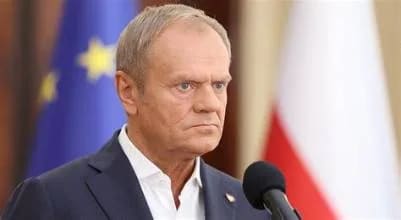
Poland faces a constitutional crisis as President Karol Nawrocki accuses Donald Tusk's government of forcibly taking over the Constitutional Tribunal
Poland is facing another major political and constitutional crisis after President Karol Nawrocki accused Prime Minister Donald Tusk's government of carrying out a forced takeover of the country's Constitutional Tribunal. The confrontation, which intensified on October 31, 2026, has raised serious questions about judicial independence, political interference and the rule of law in Poland. The latest developments highlight the growing power struggle between the country's pro-European government and nationalist political forces over the control and future direction of the judiciary.
Poland's Constitutional Tribunal Becomes the Centre of Political Conflict
The latest controversy began after the Constitutional Tribunal announced the suspension of its president, Bogdan Swieczkowski, on Friday. Judge Anna Korwin-Piotrowska, the tribunal's longest-serving judge, announced the suspension and assumed responsibility for leading the institution. Swieczkowski, who was appointed during the previous Law and Justice (PiS) government, is considered an ally of President Karol Nawrocki.
The decision immediately triggered a political confrontation, with supporters of the suspended court president questioning the legitimacy of the move. The development also intensified tensions between Nawrocki and Prime Minister Donald Tusk, whose government has repeatedly promised to reform Poland's judicial system and restore institutional independence. The dispute has now developed into a broader constitutional battle over who has the authority to control the country's highest judicial institution.
President Karol Nawrocki Accuses Tusk Government of Forcible Takeover
President Karol Nawrocki strongly criticised the government's actions, describing the suspension of the tribunal's leadership as a forced takeover of a constitutional institution. Nawrocki reportedly interrupted his African diplomatic trip and returned to Poland to address the escalating situation. Upon arriving, he visited the court, where several hundred protesters had gathered demanding the reinstatement of Swieczkowski.
The president also called for urgent political consultations to discuss the growing institutional crisis. His response reflects the increasingly strained relationship between the presidency and the government, particularly over judicial appointments and the interpretation of constitutional authority. The opposition has portrayed the suspension as an attack on judicial independence, while supporters of the government's reform agenda argue that decisive action is necessary to address longstanding institutional problems.
Donald Tusk Defends Judicial Reforms and Rule of Law
Prime Minister Donald Tusk has defended his government's approach, arguing that the measures are part of a broader effort to restore the rule of law in Poland. His administration has maintained that previous judicial reforms introduced under the Law and Justice Party weakened the independence of the country's courts and created serious concerns about political influence over judicial institutions.
Since returning to power in 2023, Tusk's coalition has promised to reverse controversial judicial changes and rebuild confidence in Poland's legal system. However, implementing these reforms has proven difficult because of resistance from President Nawrocki and political figures associated with the previous government. Tusk has acknowledged that the process may be difficult and politically challenging but insists that meaningful reform requires decisive action.
Understanding the Long-Running Dispute Over Poland's Judiciary
The current constitutional confrontation has its roots in political developments dating back to 2015, when the Law and Justice Party attempted to appoint judges to positions that had already been filled by the previous government. The resulting controversy changed the composition of the Constitutional Tribunal and generated years of debate about the legitimacy and independence of judicial appointments.
During its eight years in government, the Law and Justice Party introduced several changes to Poland's judicial system. These reforms attracted criticism from domestic opponents and European institutions, particularly over concerns that political authorities were gaining excessive influence over the judiciary.
After Donald Tusk's coalition took office in 2023, restoring judicial independence became one of its major political priorities. However, President Nawrocki has opposed several government-backed initiatives. Earlier in 2026, he refused to swear in some judges nominated by parliament, while Swieczkowski declined to allow certain judges elected by the current parliamentary majority to take their positions on the tribunal.
These disagreements have contributed to an institutional deadlock in which competing political groups refuse to recognise judicial appointments made by their opponents.
Protests and Political Tensions Escalate in Warsaw
The dispute has also moved beyond political statements and entered the streets of Warsaw. Hundreds of protesters gathered outside the Constitutional Tribunal following the announcement of Swieczkowski's suspension. Riot police were deployed around the court premises to maintain public order and prevent further escalation.
The demonstrations reflect the deep political divisions within Poland, where supporters of the government and the nationalist opposition have sharply different views about judicial reform. For the opposition, the suspension represents an unacceptable intervention in the country's constitutional institutions. Meanwhile, supporters of Tusk's government view the developments as part of a necessary effort to address years of controversial judicial changes.
The growing protests demonstrate how disagreements over judicial appointments and constitutional authority can quickly become broader political and public-order challenges.
What the Crisis Means for Democracy and Judicial Independence in Poland
The ongoing conflict raises important questions about the separation of powers and the independence of judicial institutions. A functioning democracy requires courts to operate independently of political pressure while ensuring that constitutional rules are respected by all branches of government.
The Constitutional Tribunal plays a significant role in Poland's political system because it determines whether legislation complies with the country's constitution. Any prolonged disagreement over its leadership and judicial appointments could weaken public confidence in the institution and make the implementation of important government policies more complicated.
The European Union is also closely concerned about developments surrounding the rule of law in Poland. The previous Law and Justice government faced repeated criticism from European institutions over judicial reforms. Tusk's administration has attempted to improve relations with Brussels by promising institutional changes. However, the latest confrontation demonstrates that restoring judicial independence remains a complicated and politically sensitive process.
What Happens Next in Poland's Constitutional Crisis?
The immediate challenge for Poland will be resolving the disagreement over the legitimacy of the tribunal's leadership and the authority of the suspended officials. Both the government and the presidency will face pressure to find a constitutional solution that prevents further institutional instability.
The confrontation could also influence Poland's political environment ahead of the next parliamentary election. Judicial reform remains a significant issue for both governing parties and opposition groups, making the Constitutional Tribunal an important centre of political debate.
Ultimately, the crisis is about more than the suspension of a court president. It represents a deeper struggle over democratic institutions, constitutional authority and the future of Poland's judicial system. How the government and presidency handle the situation could have lasting consequences for public trust, political stability and the country's relationship with European institutions.
Source : https://www.reuters.com/world/polands
Follow : https://globalbizinsider.com/