Pound Rises to Highest Level Since Brexit Referendum
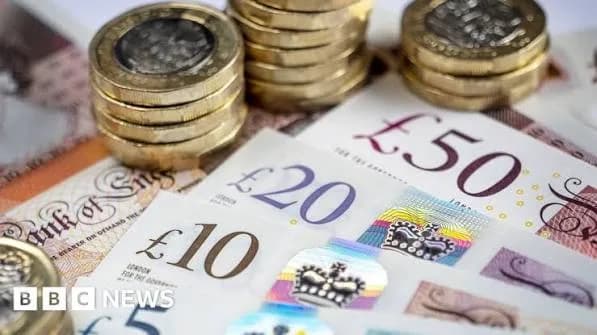
The pound rises to its highest level since the Brexit referendum, supported by stronger UK economic growth, political stability and interest rate expectations.
The pound rises to its highest level since the Brexit referendum, marking a significant recovery for the British currency after years of economic uncertainty and fluctuations in international financial markets. Sterling has strengthened considerably against major global currencies, including the US dollar and the euro, as investors respond to improving economic conditions in the United Kingdom and expectations of higher interest rates.
According to Bank of England figures, the pound's overall value against a basket of 18 major international currencies reached 86.4 this week on its effective exchange rate index, where 100 represents the currency's value in 2005. This marks the highest level recorded since the June 2016 Brexit referendum. The Bank of England is expected to officially confirm the calculation on Thursday.
Sterling experienced a significant decline following the Brexit referendum in June 2016, when the UK voted to leave the European Union. Uncertainty surrounding the country's future trade relationships, economic prospects and political direction continued to put pressure on the currency throughout the Brexit process. The pound subsequently faced further setbacks during the COVID-19 pandemic and the financial market turmoil caused by the UK's 2022 mini-budget.
However, recent developments indicate that international investors are beginning to view the British economy more positively. Relative political stability, stronger-than-expected economic growth and improving relations between the United Kingdom and the European Union have contributed to the currency's recent performance. Some market participants believe these factors are helping restore confidence in sterling after years of uncertainty.
Jim O'Neill, an economist and former Treasury minister, said he was not surprised by the pound's improvement. He suggested that investors had underestimated the improving momentum in the UK economy. His comments reflect a broader reassessment of Britain's economic outlook as recent growth figures have performed better than earlier expectations.
The pound has also recorded gains against major currencies in recent weeks. As of 04:15 GMT on Thursday, sterling was trading 0.13% higher against the US dollar at $1.3495. However, it was down 0.16% against the euro at €1.1979. These movements demonstrate that currency performance can vary depending on individual exchange rate conditions, even when the overall effective value of sterling is strengthening.
Another important factor supporting the pound is the Bank of England's upcoming interest rate decision. The Bank's nine-member Monetary Policy Committee faces an important decision, with the first interest rate increase in three years widely expected. Higher interest rates can make a country's financial assets more attractive to international investors, potentially increasing demand for its currency. Expectations of tighter monetary policy have therefore provided additional support to sterling.
A stronger pound could also benefit British consumers and businesses by making imported goods and services relatively cheaper. Lower import costs may help reduce inflationary pressure, while British residents could enjoy greater purchasing power when travelling abroad or buying products from international markets. Businesses that rely heavily on imported raw materials and goods may also benefit from reduced expenses. However, a stronger currency can create challenges for exporters because British products may become more expensive for overseas customers.
Despite the positive currency performance, the UK economy continues to face challenges. Higher energy and fuel prices have started affecting consumer confidence, raising concerns about household spending and the broader economic outlook. These pressures could influence future inflation trends and the Bank of England's monetary policy decisions.
The recent rise in sterling represents an important milestone for the British currency, particularly after the economic and political uncertainty experienced since the Brexit referendum. Stronger economic growth, improving investor sentiment and expectations of higher interest rates have helped the pound reach its strongest overall level in more than a decade. However, its future direction will depend on inflation, energy prices, economic performance and upcoming monetary policy decisions.
Source: https://www.bbc.com/news/articles/c6lykq2qjn2vo
Follow The Global Biz Insider For More Such News .