Putin Meets US Envoys Kushner and Witkoff as Russia-Ukraine Peace Talks Resume
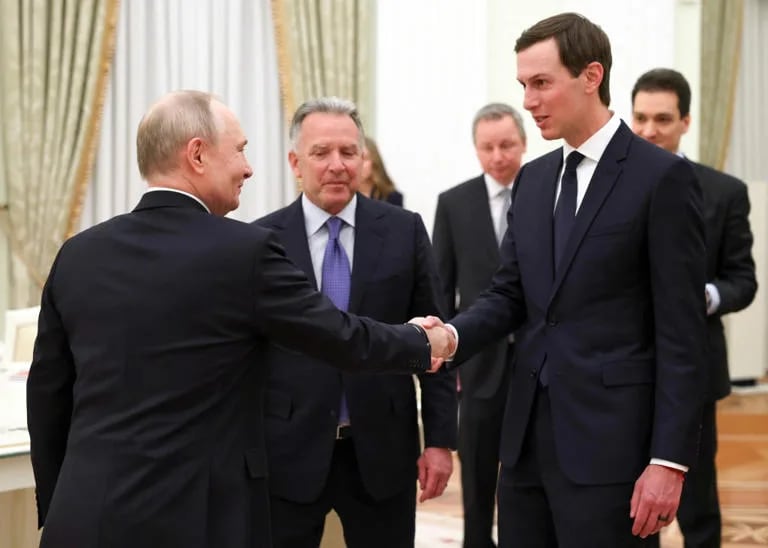
Putin meets US envoys Jared Kushner and Steve Witkoff as Washington pushes to revive Russia-Ukraine peace talks
The ongoing Russia-Ukraine war has entered another important diplomatic phase as US President Donald Trump's special envoys, Steve Witkoff and Jared Kushner, met Russian President Vladimir Putin in Moscow to discuss possible pathways toward ending the conflict. The high-level meeting, followed by discussions with Ukrainian President Volodymyr Zelenskyy in Dublin, represents a renewed effort by Washington to bring both sides closer to a negotiated settlement. Although the discussions have not produced a major breakthrough, the possibility of involving European representatives in future negotiations has raised new hopes for diplomatic progress.
US Envoys Meet Putin to Revive Ukraine Peace Negotiations
The meeting between Vladimir Putin, Steve Witkoff and Jared Kushner took place at the Kremlin on November 12, 2026. The discussions followed two days of US-mediated negotiations between Russian and Ukrainian delegations in Abu Dhabi, United Arab Emirates. These talks marked the first direct discussions between representatives of Moscow and Kyiv in nine months, highlighting Washington's efforts to restart stalled diplomatic negotiations.
While the Abu Dhabi discussions did not result in a comprehensive peace agreement, both sides reached an understanding on a major prisoner exchange. The negotiations also established plans for another round of discussions, offering a limited but important opportunity to maintain diplomatic communication.
Europe Could Join the Next Round of Russia-Ukraine Peace Talks
One of the most significant developments from the Moscow meeting was the possibility of European participation in future Russia-Ukraine peace negotiations. The United States and Ukraine have supported greater European involvement, arguing that the continent's security arrangements will be directly affected by any agreement to end the war.
Jared Kushner indicated that discussions with Putin included efforts to secure Russian approval for European representatives to participate in the next round of negotiations. Ukrainian President Volodymyr Zelenskyy also welcomed the development, emphasizing that European countries should have a direct voice rather than remaining outside the main negotiating process.
However, questions remain about how European participation will be organized. Russia has previously opposed direct European involvement, arguing that several European countries are supporting Ukraine through military assistance and financial resources. Moscow has also called for European nations to appoint a representative before joining the negotiations.
Territorial Disputes and Security Guarantees Remain Major Obstacles
Despite renewed diplomatic engagement, significant disagreements between Russia and Ukraine continue to complicate peace efforts. Territorial control remains one of the most difficult issues, particularly regarding the eastern Ukrainian region of Donbas and other territories claimed by Moscow.
Russia continues to maintain its position on the four Ukrainian regions it declared annexed in 2022, although it has never fully controlled all of them. Ukraine, meanwhile, has rejected demands to surrender additional territory as a condition for ending the war.
Security guarantees represent another major challenge. Ukraine wants reliable international commitments to prevent renewed Russian aggression following a potential ceasefire. European countries have also discussed the possibility of deploying peacekeeping forces to help maintain stability. However, Putin has strongly opposed the presence of European troops in Ukraine after a ceasefire, describing such a deployment as an unacceptable security threat.
These disagreements demonstrate why achieving a lasting Russia-Ukraine peace agreement will require more than diplomatic meetings. Both sides must address fundamental questions concerning territorial sovereignty, military security and the future European security framework.
Zelenskyy Holds Discussions with US Representatives in Dublin
Following their meeting with Putin in Moscow, Steve Witkoff and Jared Kushner travelled to Dublin, Ireland, where they met Ukrainian President Volodymyr Zelenskyy. The discussions were part of Washington's broader diplomatic effort to maintain communication with both Moscow and Kyiv.
Zelenskyy welcomed the possibility of European representatives joining future negotiations and emphasized the importance of maintaining Ukraine's position in any peace agreement. His government continues to insist that ending the conflict should not require Ukraine to surrender its internationally recognized territory.
The discussions in Dublin also highlighted the importance of coordination between the United States, Ukraine and European partners. European leaders have repeatedly stressed that any settlement must provide credible security guarantees and protect long-term stability across the continent.
Russia-Ukraine War Continues Despite Diplomatic Efforts
While international negotiations are gaining attention, military operations continue across Ukraine. Russian missile and drone attacks have targeted Ukrainian infrastructure, including energy facilities, creating additional pressure as the country approaches another winter during the conflict.
Disruptions to electricity, heating and other essential services remain serious concerns for Ukrainian civilians. Continued attacks on infrastructure demonstrate the humanitarian and economic consequences of the war, even as diplomatic representatives attempt to establish a path toward peace.
Ukraine has also raised concerns about disruptions to the Starshield satellite communication system, which supports military operations and drone-related activities. These developments underline the importance of military capabilities and international support in the ongoing conflict.
Can the Latest Diplomatic Efforts End the Russia-Ukraine War?
The meetings involving Putin, Kushner, Witkoff and Zelenskyy represent an important attempt to restart negotiations, but expectations of an immediate peace agreement remain uncertain. The agreement to pursue another round of talks and the possibility of a large prisoner exchange provide some positive developments.
However, territorial disagreements, NATO-related concerns, European security arrangements and the question of international military involvement remain unresolved. A successful settlement will require meaningful compromises and guarantees that address the security concerns of all parties without undermining Ukraine's sovereignty.
The involvement of European countries could become particularly important in the next stage of negotiations. Since the consequences of the conflict extend beyond Russia and Ukraine, European participation may help establish a broader framework for long-term regional stability.
Conclusion
The meeting between Vladimir Putin and US envoys Steve Witkoff and Jared Kushner marks another significant chapter in international efforts to end the Russia-Ukraine war. Although the latest discussions have not delivered a major breakthrough, the possibility of European participation and plans for further negotiations offer opportunities for continued diplomatic engagement.
As Washington works to bring Moscow and Kyiv closer to an agreement, the biggest challenge remains finding a settlement that addresses territorial disputes, security guarantees and Ukraine's future. Whether these diplomatic efforts can translate into a lasting peace agreement will depend on the willingness of all parties to move beyond their existing differences.
Source: https://apnews.com/article/russia
Follow: Global Biz Insider