Quad Alliance 2026: Trump and Albanese Strengthen Indo-Pacific Security Partnership
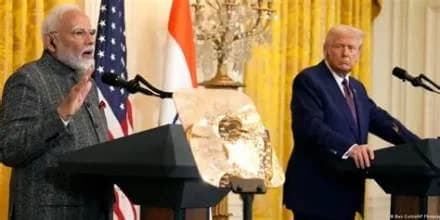
Donald Trump and Anthony Albanese announce stronger Quad cooperation with India and Japan, focusing on maritime security, AI, critical minerals
Introduction
The Quad Alliance is gaining renewed strategic importance as the United States, Australia, India and Japan strengthen their cooperation to promote security, economic stability and regional prosperity in the Indo-Pacific. At the latest Quad leaders' summit held in Manila, Philippines, on November 17, 2026, US President Donald Trump and Australian Prime Minister Anthony Albanese highlighted progress in their partnership and announced plans for deeper collaboration with Indian Prime Minister Narendra Modi and Japanese Prime Minister Sanae Takaichi. The discussions focused on strengthening maritime security, expanding cooperation in artificial intelligence (AI), securing critical mineral supply chains and developing new military exercises. Under the theme of "peace through strength", the four countries reaffirmed their commitment to maintaining a free, open and stable Indo-Pacific region.
Quad Leaders Announce Stronger Indo-Pacific Security Cooperation
The Manila summit marked the first meeting of Quad leaders since 2024, bringing renewed attention to the strategic partnership between the four countries. Donald Trump described the United States, Australia, India and Japan as important global partners capable of contributing to a stable and prosperous Indo-Pacific.
Anthony Albanese also emphasised the importance of cooperation, arguing that stronger relationships between regional partners could improve international security and economic stability. The leaders discussed how coordinated action could address emerging challenges, particularly growing maritime tensions and competition over strategic resources.
The renewed engagement also reflects the importance of maintaining strong diplomatic relationships at a time of increasing geopolitical uncertainty. Through the Quad framework, the four countries aim to strengthen regional cooperation without compromising their individual national interests.
New Quad Military Exercises to Strengthen Maritime Security
One of the major announcements from the summit was the plan to expand joint maritime security exercises involving the four member countries. These activities are expected to improve coordination between their naval and surveillance forces while strengthening their ability to monitor important maritime routes.
Australia is expected to deploy its P-8A Poseidon and P-3C Orion maritime patrol aircraft as part of the planned exercises in early 2027. The initiative will build on previous cooperation, including the Malabar naval exercise conducted near Japan, which involved anti-submarine and anti-surface warfare operations.
Maritime security has become an increasingly important issue in the Indo-Pacific because of territorial disputes, strategic competition and the importance of international shipping routes. The South China Sea and East China Sea remain particularly sensitive areas where regional tensions could affect international trade and security.
Through greater information sharing and joint military activities, Quad members hope to improve maritime awareness and protect freedom of navigation across the region.
China Factor and Growing Strategic Competition
China's expanding military capabilities and growing influence in the Indo-Pacific remain important considerations behind the Quad's strategic priorities. Although the four countries describe their partnership as a platform for regional stability rather than an alliance directed against a particular nation, their growing security cooperation is likely to attract attention from Beijing.
The Quad countries have repeatedly highlighted the importance of respecting national sovereignty, maintaining international maritime rules and preventing unilateral actions that could destabilise the region.
Anthony Albanese also clarified that Australia's participation in military exercises was intended to strengthen regional peace and protect national sovereignty rather than target a particular country. Nevertheless, the increasing coordination between the United States, India, Australia and Japan reflects wider geopolitical competition in the Indo-Pacific.
Maintaining diplomatic communication with China will therefore remain important, particularly as regional countries attempt to balance economic relationships with national security priorities.
Critical Minerals and Rare Earths Become a Major Priority
Beyond defence and maritime security, critical minerals and rare earth elements emerged as major areas of cooperation during the Quad summit. These resources are essential for manufacturing advanced electronics, electric vehicles, renewable energy technologies, defence equipment and semiconductor components.
China currently holds a significant position in global rare earth processing and supply chains, creating concerns among other major economies about excessive dependence on a limited number of suppliers.
Donald Trump expressed confidence that the United States could strengthen its rare earth production capacity within the next 10 months, with support from Australia, India and Japan. Greater cooperation among these countries could help diversify global supply chains, improve resource security and create new investment opportunities.
Australia's mineral resources, India's growing industrial capabilities, Japan's advanced technology sector and American manufacturing capacity could provide complementary advantages. Strengthening these connections may also help reduce supply chain vulnerabilities during periods of international economic uncertainty.
Artificial Intelligence and Emerging Technologies
Artificial intelligence was another important subject discussed by the Quad leaders. As AI becomes increasingly influential across defence, business, healthcare, manufacturing and communication, governments are recognising the need for stronger international cooperation in developing and protecting advanced technologies.
The four countries discussed expanding collaboration in AI innovation, technological security and access to emerging technologies. Donald Trump described advanced artificial intelligence as a major opportunity for economic growth, comparing its potential impact with that of the Industrial Revolution.
The leaders also recognised the importance of protecting sensitive technologies and strengthening cooperation against cybersecurity threats. Their discussions reflect growing concerns that technological competition could influence future economic leadership and national security.
By coordinating research, investment and technology policies, Quad members hope to strengthen their positions in the global digital economy while supporting a more secure technological environment across the Indo-Pacific.
New Quad Business Forum Planned for 2027
Economic cooperation is expected to become another important pillar of the partnership. Anthony Albanese welcomed plans for a new Quad Business Leaders' Forum scheduled for early 2027.
The proposed forum will bring together business leaders, government representatives and policy experts from the four countries to encourage commercial partnerships, investment and economic cooperation.
The initiative could create opportunities in areas such as infrastructure development, advanced manufacturing, critical minerals, energy security and digital technologies.
Stronger business relationships may also help diversify international trade networks and improve economic resilience. For developing economies across the Indo-Pacific, increased investment and infrastructure cooperation could contribute to employment generation, technological development and long-term economic growth.
India's Growing Role in the Quad Partnership
India continues to play a significant role in the Quad's regional strategy because of its geographical position, economic potential and growing influence in international affairs.
Prime Minister Narendra Modi's participation in the Manila summit highlighted India's commitment to strengthening maritime security, developing reliable supply chains and supporting disaster response initiatives.
For India, the Quad provides an important platform to cooperate with major economies while maintaining its independent foreign policy approach. Its strategic position in the Indian Ocean also makes maritime security and freedom of navigation particularly important.
India's participation could further strengthen cooperation in defence technology, critical minerals, infrastructure and emerging technologies. At the same time, the partnership provides opportunities for India to expand its economic relationships with the United States, Australia and Japan.
What the Quad Summit Means for the Future of the Indo-Pacific
The latest summit demonstrates that the Quad is gradually expanding beyond traditional diplomatic discussions into practical cooperation involving defence, technology, infrastructure and economic development.
The planned maritime exercises, critical mineral initiatives, AI cooperation and business forum indicate that the four countries are interested in developing a more comprehensive regional partnership.
However, the success of these initiatives will depend on their implementation, sustained political commitment and the ability of member countries to manage differences in their national priorities.
The Quad will also need to maintain constructive relationships with other Indo-Pacific countries, particularly members of the Association of Southeast Asian Nations (ASEAN). Regional cooperation will be essential to ensuring that strategic competition does not undermine economic development or regional stability.
Conclusion
The November 2026 Quad summit in Manila represents an important development in international relations and Indo-Pacific security cooperation. Donald Trump, Anthony Albanese, Narendra Modi and Sanae Takaichi have reaffirmed their commitment to strengthening partnerships in maritime security, artificial intelligence, critical minerals and economic development.
While growing strategic competition with China remains an important factor influencing the group's priorities, the leaders have presented the Quad as a partnership focused on regional stability, sovereignty and shared prosperity.
The planned military exercises in 2027 and the proposed Quad Business Leaders' Forum could further strengthen cooperation between the four countries. Ultimately, the effectiveness of the Quad Alliance will depend on how successfully its members translate diplomatic commitments into practical initiatives that support a peaceful, secure and economically resilient Indo-Pacific
Source : https://www.theguardian.com/us-news/2
Follow : https://globalbizinsider.com/