Russia-Ukraine Talks End Without Major Breakthrough
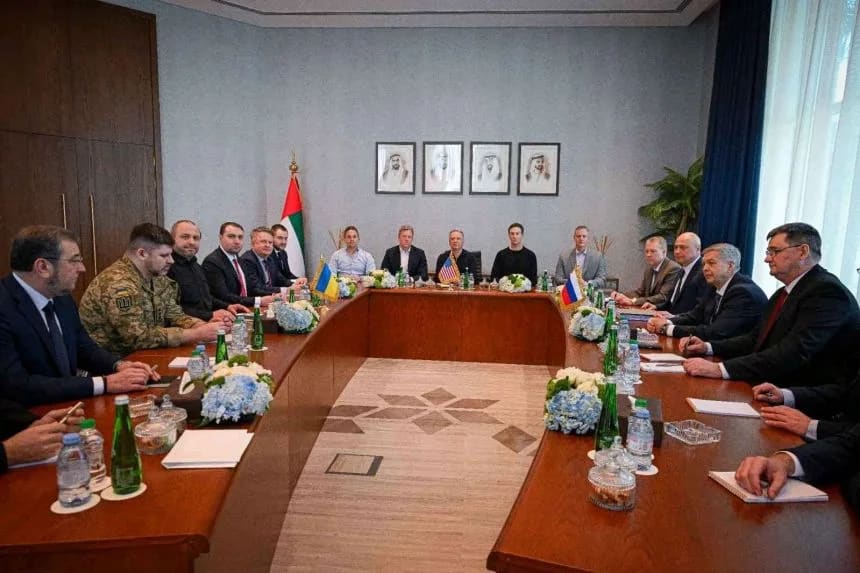
Russia-Ukraine talks in Abu Dhabi focus on post-war security, territorial disputes and European involvement but end without a major peace breakthrough.
Russia-Ukraine talks in Abu Dhabi have concluded without a major breakthrough, despite renewed diplomatic efforts to address the ongoing war and establish a framework for post-war security in Europe. The two-day negotiations, mediated by the United States on November 10 and 11, brought Russian and Ukrainian representatives together for the first time in nine months to discuss the future of the conflict, security guarantees and the possibility of a lasting peace agreement.
Although the discussions did not produce a significant agreement to end the war, both countries agreed in principle to organise a large-scale prisoner-of-war exchange. The development offered a limited humanitarian achievement amid continuing disagreements over territorial claims, security arrangements and the involvement of European countries in future negotiations.
Abu Dhabi Hosts Renewed Russia-Ukraine Peace Negotiations
The latest Russia-Ukraine talks took place in Abu Dhabi, United Arab Emirates, with representatives from Moscow and Kyiv meeting under the mediation of US officials. The discussions were part of Washington's renewed efforts to bring both sides closer to a possible settlement after several earlier diplomatic initiatives failed to achieve substantial progress.
The American delegation included special envoys Steve Witkoff and Jared Kushner, who worked with representatives from both countries to explore potential solutions. Russia's delegation was led by Vladimir Medinsky, while Ukraine's negotiating team was headed by Rustem Umerov.
The negotiations focused on several complicated issues, particularly the security arrangements that could follow the end of the war. US representatives indicated that establishing a framework capable of preventing another military confrontation would be essential to any lasting settlement.
However, the discussions also highlighted the significant differences that continue to separate Moscow and Kyiv. Neither side appeared ready to make the major compromises necessary to resolve the conflict.
Post-War Security Becomes a Central Issue
One of the most important subjects discussed during the negotiations was the future security structure of Europe. US representatives suggested that any eventual peace settlement would need to address the security concerns of both Russia and Ukraine while involving European institutions and governments.
Ukraine wants reliable international security guarantees to prevent another Russian military offensive if the current conflict ends. Kyiv has repeatedly emphasised that a peace agreement must include meaningful protections rather than temporary commitments that could leave the country vulnerable to future attacks.
Russia, meanwhile, has raised broader concerns about NATO's military presence and the European security structure. Moscow has long demanded changes to the regional security arrangements and has questioned NATO's expansion towards its borders.
These competing positions make negotiations particularly difficult. While Ukraine seeks assurances that its sovereignty and territorial integrity will be protected, Russia wants a broader discussion about the military and political balance across Europe.
US envoy Jared Kushner said that post-war security was a major focus of the discussions. He also acknowledged that trust between the two countries remains extremely limited after years of fighting.
European Countries' Role Remains a Point of Disagreement
The participation of European countries has emerged as another major challenge in the peace negotiations.
Several European governments believe they must have a direct role in discussions concerning the continent's long-term security. Countries including France, Germany and the United Kingdom have expressed concerns about any arrangement that could affect European defence without meaningful European participation.
However, Moscow has resisted direct European involvement in the trilateral negotiations, arguing that European governments have supported Ukraine through military assistance and financial backing.
European representatives were present in Abu Dhabi but were not included in the direct discussions between Russia, Ukraine and the United States. They instead held separate consultations with American and Ukrainian officials.
Ukraine has maintained that European participation is essential because the outcome of the negotiations will directly influence the continent's future security.
Ukrainian President Volodymyr Zelenskyy has also stressed that European security cannot be discussed without European countries being represented.
Washington has indicated that it wants to explore a broader negotiating format that could eventually include European representatives. However, whether Moscow will accept such an arrangement remains uncertain.
Prisoner Exchange Offers a Limited Humanitarian Achievement
Despite the absence of a major peace agreement, the negotiations produced a potentially significant humanitarian development.
Russian and Ukrainian representatives agreed in principle to organise a large-scale exchange of prisoners of war. Officials indicated that the final numbers and arrangements would be confirmed separately.
The proposed exchange could become one of the largest between the two countries. According to statements made following the negotiations, the exchange could take place within two to three weeks, subject to final arrangements.
Prisoner exchanges have remained among the few areas where Russia and Ukraine have managed to achieve practical cooperation despite the ongoing conflict.
The latest understanding provides some hope for families waiting for the return of captured soldiers. However, the humanitarian agreement does not resolve the larger political and military disagreements preventing progress towards a comprehensive peace settlement.
Territorial Disputes Continue to Complicate Peace Efforts
The question of occupied Ukrainian territory remains one of the most difficult obstacles to ending the war.
Russia and Ukraine continue to hold fundamentally different positions regarding territorial control and the future status of occupied regions.
Ukraine has rejected territorial concessions as a condition for peace and continues to defend its internationally recognised borders. Russia, meanwhile, has maintained its territorial demands and shown little indication of abandoning its claims.
American representatives have acknowledged that territorial questions are likely to be among the hardest issues to resolve.
Without an agreement on territorial arrangements, the possibility of reaching a comprehensive peace settlement remains limited. Even if progress is made on security guarantees and humanitarian matters, disagreements over land could prevent both countries from accepting a final agreement.
US Envoys Prepare for Further Discussions With Putin and Zelenskyy
Following the Abu Dhabi negotiations, American representatives are expected to continue diplomatic discussions with the leaders of both countries.
Jared Kushner and Steve Witkoff are scheduled to travel to Moscow to meet Russian President Vladimir Putin. They are also expected to meet Ukrainian President Volodymyr Zelenskyy in Dublin, Ireland, to discuss the results of the latest negotiations and explore possible next steps.
These meetings could help determine whether the proposals discussed in Abu Dhabi can be developed into a more comprehensive diplomatic framework.
Washington is particularly interested in identifying areas where Russia and Ukraine could reach an understanding on security arrangements, de-escalation and the participation of European countries.
However, the outcome will depend largely on whether Moscow and Kyiv are prepared to reconsider their existing positions.
Continuing Conflict Raises Concerns Over Peace Prospects
The diplomatic discussions are taking place against the backdrop of continued fighting between Russian and Ukrainian forces.
Military attacks, missile strikes and drone operations have continued despite renewed negotiations. Ukraine has also faced significant pressure on its energy infrastructure, raising concerns about the humanitarian and economic consequences of another difficult winter.
The prolonged conflict has caused extensive destruction, displaced millions of people and placed considerable pressure on both countries.
For international governments, the absence of a meaningful peace agreement remains a major concern. The war has also affected European security, international trade, energy markets and geopolitical relations.
Although the latest negotiations demonstrate that diplomatic communication remains possible, the lack of progress on fundamental issues highlights how difficult it will be to achieve a lasting settlement.
What Happens Next in Russia-Ukraine Peace Talks?
The next phase of diplomacy will likely depend on the discussions between American representatives and the Russian and Ukrainian presidents.
The proposed prisoner exchange could provide a positive starting point for further humanitarian cooperation. However, progress towards a broader agreement will require solutions to territorial disputes, security guarantees and the role of European countries.
The United States is attempting to connect the immediate objective of ending the war with a wider discussion about Europe's future security structure. Whether this approach can bring the two sides closer remains uncertain.
For Ukraine, any settlement must protect its independence and prevent another invasion. For Russia, the negotiations involve longstanding demands concerning NATO and the wider European security framework.
The Abu Dhabi meeting has therefore demonstrated both the potential and the limitations of renewed diplomatic engagement.
Conclusion
The latest Russia-Ukraine talks have produced a limited humanitarian understanding but no major breakthrough towards ending the war. Discussions on post-war security, territorial disputes and Europe's involvement have exposed the continuing differences between Moscow and Kyiv.
While the proposed prisoner exchange offers a positive development, achieving a lasting peace will require substantial diplomatic progress and compromises from both sides. The upcoming meetings between US envoys and the Russian and Ukrainian presidents could provide further direction for negotiations, but a comprehensive settlement remains uncertain.
Source : https://www.bbc.com/news/articles/ck792we7zrz4o
Follow The Global Biz Insider For More Such News .