Saudi-Led Coalition Strikes Houthis as Yemen War Escalates
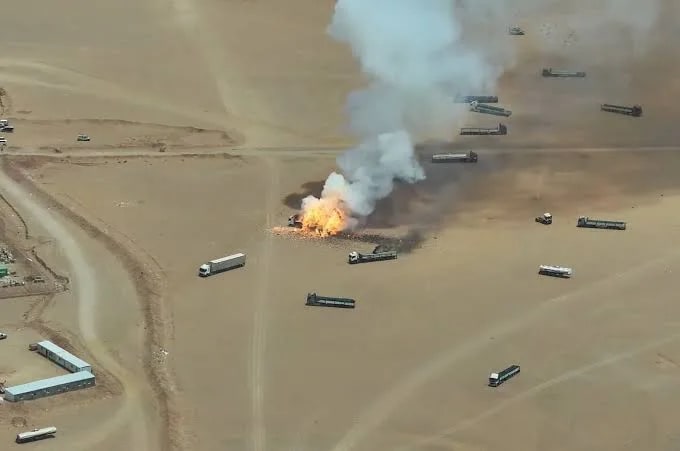
Saudi-led coalition strikes Houthis, destroying missile launchers and tunnels as attacks on Saudi airports, oil facilities and Yemen intensify.
The Saudi-led coalition strikes Houthis campaign has intensified as Saudi Arabia responds to a series of missile and drone attacks attributed to the armed group, raising concerns about further escalation in the Middle East. The coalition announced that its forces had destroyed four ballistic missile launchers and five tunnels allegedly used by the Houthis to store missiles, alongside attacks on a missile depot and other military infrastructure in Yemen.
Coalition spokesperson Turki al-Maliki said on Monday that the operation was aimed at neutralising security threats and disrupting Houthi supply routes between territories under the group's control. The strikes also targeted military fortifications, personnel and equipment along Yemen's front lines, according to the coalition.
The latest developments highlight the growing intensity of the conflict, with attacks affecting critical infrastructure and increasing security concerns across Saudi Arabia and neighbouring areas.
Houthis Claim Attacks on Saudi Infrastructure
The Houthis, also known as Ansar Allah, claimed responsibility for a new series of attacks targeting Saudi Arabia and military positions inside Yemen.
Houthi military spokesperson Yahya Saree said the group had launched a ballistic missile towards Riyadh's King Khalid International Airport. Saudi coalition officials separately reported that air defences intercepted and destroyed a ballistic missile directed at the Saudi capital.
Saree also claimed that Houthi forces used drones to target oil pumping stations in Saudi Arabia. In separate statements, the group reported additional ballistic missile attacks against opposing forces and weapons depots in Yemen's Aden and Lahij governorates.
These claims underline the expanding scope of the confrontation, which now involves missile strikes, drone operations and attacks on strategically important infrastructure. The competing military statements could not be independently verified from the available information.
Riyadh Airport Reopens After Deadly Attack
Security concerns have remained high following a reported Houthi attack on Riyadh's King Khalid International Airport earlier this month. According to the supplied report, the attack killed 13 people and injured more than 300, making it one of the deadliest attacks on Saudi Arabia in more than a decade.
The incident led to a temporary airport closure, disrupting travel plans for thousands of passengers. It also forced the postponement of Saudi Arabia's flagship investment conference until 2027, highlighting the potential economic consequences of continued instability.
Airport operations resumed on Sunday. However, the Houthis warned travellers to avoid the facility, describing it as a military target.
The threat to a major international airport has raised concerns about civilian safety, aviation security and the resilience of Saudi Arabia's transport infrastructure.
Yemen's Conflict Enters a More Dangerous Phase
The latest strikes come amid a renewed phase of fighting in Yemen's long-running war. Saudi Arabia intervened in 2015 to lead a military coalition supporting Yemen's internationally recognised government after Houthi forces seized the capital, Sanaa, in 2014.
A truce established in 2022 had significantly reduced large-scale fighting, although it did not resolve the underlying political and military divisions. According to the supplied report, the truce collapsed last month amid a renewed Houthi offensive and attacks on Saudi energy facilities and airports.
The Houthis have also announced a maritime blockade targeting Saudi Arabia, adding another dimension to the conflict and raising concerns about regional shipping and trade.
In response, Yemeni government forces launched an operation known as Operation Yemen Dawn, aimed at regaining territory held by the Houthis.
The renewed confrontation risks undermining efforts to restore stability and could further complicate humanitarian operations in a country already facing severe economic and humanitarian challenges.
Saudi Arabia Strengthens Its Air Defence Preparedness
Saudi Arabia's response has also involved diplomatic engagement and efforts to maintain air defence capabilities.
Greek Prime Minister Kyriakos Mitsotakis met Saudi Crown Prince Mohammed bin Salman as operations resumed at Riyadh airport. According to the Greek prime minister's office, Mitsotakis responded favourably to Saudi Arabia's request to keep a US-made Patriot air defence system in the kingdom.
The system, deployed by Greece to Saudi Arabia in 2021, protects energy infrastructure in Yanbu on the Red Sea coast.
Maintaining these defensive capabilities is particularly significant as Saudi Arabia faces reported missile and drone threats against airports, energy facilities and other strategic locations.
The latest developments demonstrate the importance of air defence systems in protecting civilian infrastructure and reducing the potential impact of cross-border attacks.
Economic and Regional Implications
The escalation between Saudi Arabia and the Houthis carries implications beyond the immediate battlefield. Attacks on airports, oil infrastructure and shipping routes could disrupt transport, energy operations, investment activity and regional commerce.
Saudi Arabia has been pursuing major economic diversification initiatives to attract international investment and expand sectors beyond oil. Continued security threats could affect investor confidence, business travel and the scheduling of major international events.
The conflict also raises concerns about maritime security and the stability of regional trade routes. Any prolonged disruption to energy infrastructure or shipping could have wider consequences for global markets, depending on the scale and duration of the disruption.
For neighbouring countries and international partners, the renewed fighting presents a challenge in balancing security cooperation with efforts to prevent a broader regional confrontation.
What Happens Next?
The situation remains volatile as the Saudi-led coalition continues its military operations and the Houthis claim further attacks. The effectiveness of the coalition's strikes, the scale of potential retaliation and the ability of Yemen's government forces to regain territory will influence the next phase of the conflict.
The reopening of Riyadh airport represents a return to normal operations at a critical transport hub, but renewed threats underline the continuing security risks.
Diplomatic engagement, protection of civilian infrastructure and efforts to prevent further escalation will be essential to limiting the conflict's humanitarian and economic consequences.
For now, the latest exchange of strikes highlights the fragility of security across Yemen and Saudi Arabia, with the potential for further disruption extending beyond the immediate conflict zone.
Conclusion: The Saudi-led coalition's latest strikes against Houthi missile infrastructure mark another significant development in Yemen's escalating conflict. With missile and drone attacks reportedly targeting strategic infrastructure, the confrontation threatens regional security, economic confidence and efforts to achieve a lasting political settlement.
Editorial note: This article is based on the information supplied.
Source : https://www.bbc.com/news/articles/crx2dyd24188o
Follow The Global Biz Insider .