Spain Train Crash Sparks Protests Against Pedro Sánchez
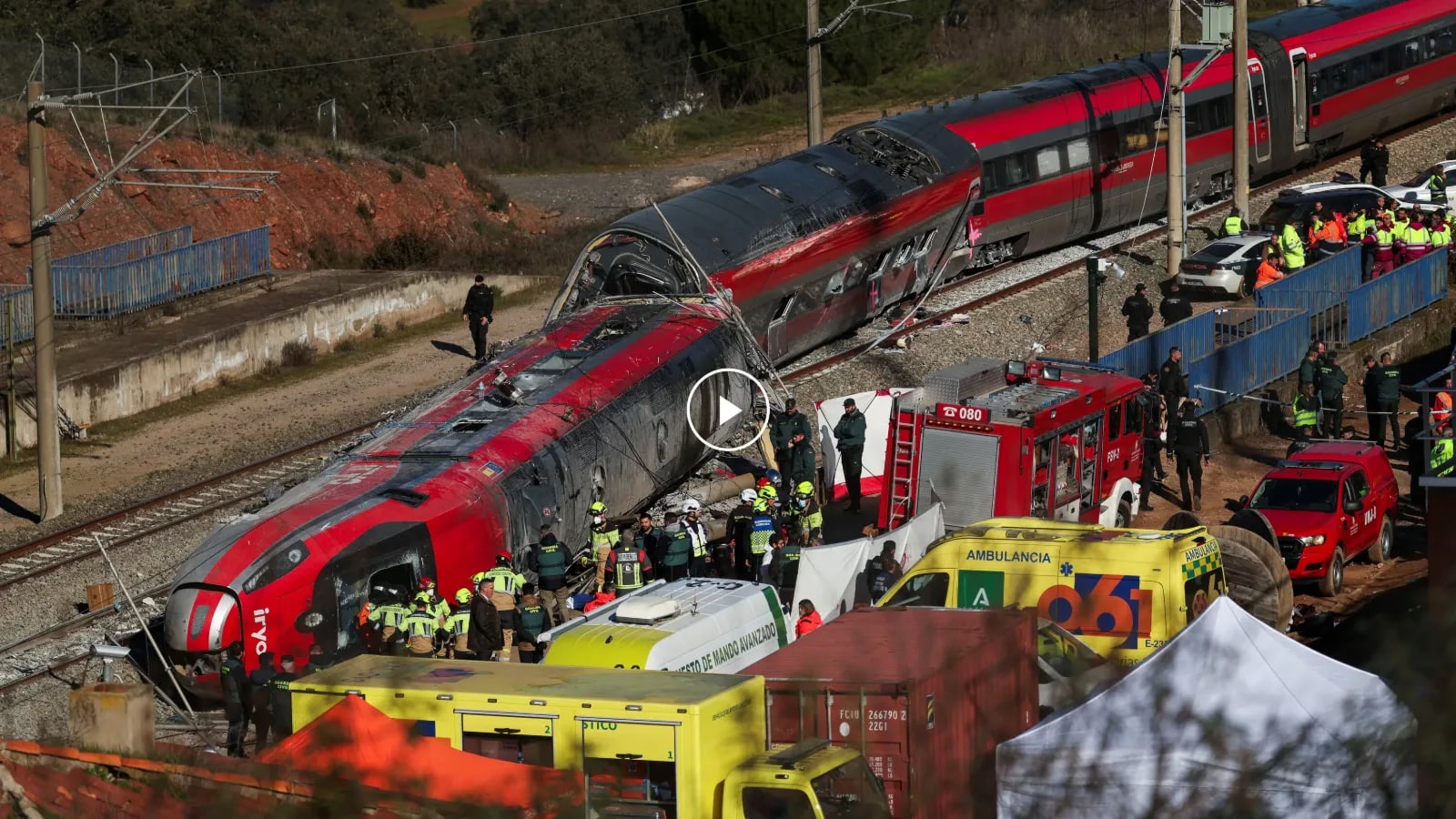
Spain's deadly train crash has sparked protests demanding Pedro Sánchez's resignation, raising urgent questions about railway safety
Spain Train Crash: A deadly high-speed train collision in Spain has triggered public anger, political controversy and protests demanding accountability from Prime Minister Pedro Sánchez and Transport Minister Óscar Puente. The tragedy, which occurred near Urda in the Toledo province on October 28, 2026, has intensified concerns about railway safety and placed additional pressure on the Spanish government ahead of the country's upcoming general election.
Deadly Train Collision in Spain Raises Safety Concerns
The Spain train crash involved two high-speed trains travelling on the Madrid-to-Seville route. A train operated by Spain's state-owned railway company, Renfe, collided with a stationary train operated by private rail company Iryo. The impact derailed carriages, caused extensive damage and left dozens of passengers dead or injured. Emergency responders rushed to the scene to rescue survivors, transport injured passengers to hospitals and search the wreckage for additional victims.
The collision has raised serious questions about the safety of Spain's high-speed railway network, which has long been considered one of Europe's most extensive. Preliminary explanations from transport officials pointed to a failure in the railway signalling and control system, followed by a decision that allowed a Renfe train to resume its journey despite a red signal. Investigators are examining the sequence of events to determine responsibility and establish whether operational or technical failures contributed to the disaster.
Far-Right Protesters Demand Pedro Sánchez's Resignation
The deadly train accident quickly became a major political issue in Spain. More than 1,000 demonstrators gathered outside the Transport Ministry in Madrid, demanding accountability and calling for the resignations of Prime Minister Pedro Sánchez and Transport Minister Óscar Puente. The demonstration was organised by far-right groups and attracted people angry over railway safety and the government's handling of public infrastructure.
Tensions escalated when some protesters pushed against police barriers, prompting riot police to intervene. Reports described officers using tear gas and charging at sections of the crowd as the demonstration turned confrontational. The clashes highlighted the growing political pressure surrounding the tragedy, as public anger over the loss of life became intertwined with broader criticism of the government.
The protests also reflected wider concerns about public trust, government transparency and the management of essential services. While demonstrators demanded immediate political consequences, the full findings of the official investigation remain important in determining the precise causes of the crash and whether negligence occurred.
Pedro Sánchez Faces Growing Political Pressure
The Spain train crash presents a significant challenge for Prime Minister Pedro Sánchez, whose government is facing scrutiny over railway safety as the country approaches its scheduled November 29, 2026, general election. The opposition has called for a thorough investigation, while far-right political figures have used the incident to intensify their criticism of the government.
Sánchez has pledged a full investigation into the collision and promised action if negligence or failures are identified. His response will be closely watched by the public, particularly by families of the victims and passengers concerned about the reliability of Spain's railway system. The government must balance the immediate needs of rescue and recovery with the longer-term responsibility of explaining how the accident occurred.
Opposition leaders have also called for transparency and accountability. The crash has become a central political concern because it raises questions not only about individual decisions but also about railway infrastructure, safety procedures and the effectiveness of oversight. However, political criticism and public demands for resignations remain distinct from the findings that investigators will need to establish.
Railway Safety Under Scrutiny After Another Deadly Accident
The latest collision has renewed concerns because Spain experienced another deadly high-speed rail disaster earlier in 2026. That January accident killed 46 people, increasing pressure on authorities to ensure that railway infrastructure, signalling equipment and operational procedures meet stringent safety standards.
The recurrence of deadly railway accidents within the same year has prompted renewed calls for a comprehensive review of Spain's rail network. Experts and policymakers are likely to face questions about maintenance, investment, emergency protocols, communication between control centres and the safeguards designed to prevent trains from entering occupied sections of track.
Spain's high-speed railway system plays an important role in national transport, connecting major cities and supporting tourism and business travel. Restoring public confidence will require transparent communication, a credible investigation and effective corrective measures wherever shortcomings are identified.
Investigation and Public Accountability Remain Key Priorities
As investigators work to establish the cause of the crash, the focus remains on understanding how the signalling failure occurred and why a train was reportedly authorised to resume its journey while another train remained ahead on the track. Establishing the facts will be essential to identifying responsibility and preventing similar accidents in the future.
The government has also faced pressure to support victims, assist injured passengers and provide information to affected families. For many people, accountability means more than political statements or resignations; it also requires practical improvements that make railway travel safer.
The tragedy has prompted a national conversation about public safety, infrastructure management and political responsibility. The findings of the investigation could influence future railway policies and shape the political debate as Spain moves closer to its November election.
Conclusion
Spain's deadly train crash has become both a national tragedy and a major political challenge for Pedro Sánchez's government. The fatal collision, protests demanding resignations and renewed concerns about railway safety have placed public accountability at the centre of the debate. As the investigation continues, Spain faces the urgent task of determining what went wrong, supporting the victims and restoring confidence in its high-speed rail network.
The coming weeks will be important in establishing the facts behind the collision and determining what measures are needed to prevent another disaster. For the Spanish government, the response will be judged not only by its promises but also by the transparency of the investigation and the effectiveness of any safety reforms that follow.
Source : https://www.nbcnews.com/world/spain/spain-train-c
Follow : https://globalbizinsider.com/