Spain Transport Minister Refuses to Resign After Deadly Train Crash
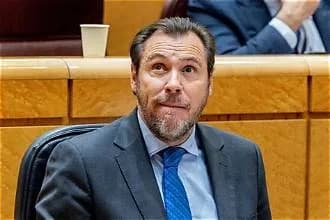
Spain's Transport Minister Óscar Puente refuses to resign after a deadly high-speed train collision kills at least 69 people, raising concerns over safety
Spain's Transport Minister Óscar Puente has rejected calls for his resignation following a devastating high-speed rail collision that has left at least 69 people dead. The accident, which occurred near the town of Urda in central Spain, has raised serious questions about railway safety, infrastructure maintenance and the government's responsibility for preventing such tragedies. Despite growing criticism from opposition politicians, railway unions and members of the public, Puente has maintained that his immediate priority is to investigate the disaster, establish what went wrong and provide solutions to restore public confidence in the country's railway network.
Speaking at a press conference in Madrid on October 30, 2026, Puente stated that he would not focus on whether he should remain in office but would instead concentrate on resolving the problems surrounding the accident. He emphasised that many questions still needed answers and that the investigation must determine the exact sequence of events that led to the collision. His refusal to resign has intensified the political debate, particularly as Spain faces renewed scrutiny over the safety of its high-speed railway system.
Spain High-Speed Train Collision Raises Serious Safety Concerns
The deadly collision involved a state-operated Renfe high-speed train and a privately operated Iryo train. The Renfe train crashed into the rear of the stationary Iryo train near Urda, in the Castilla-La Mancha region. Preliminary findings indicated that the Renfe train was travelling at approximately 160 to 200 kilometres per hour at the time of impact. The force of the collision caused extensive damage to the carriages, making rescue operations and victim identification particularly difficult.
The disaster has become one of Spain's deadliest railway accidents in recent years. Emergency services, investigators and forensic teams have continued working at the crash site to recover victims, examine the wreckage and establish the circumstances surrounding the incident. Authorities have also warned that the death toll could change as identification and recovery operations continue. The tragedy has left families grieving while raising concerns among passengers about the reliability of railway safety systems.
Railway Signalling Failure Under Investigation
One of the central issues in the investigation is the reported failure of the LZB signalling and train protection system. The system is designed to monitor train movements and automatically stop trains when necessary to prevent collisions. According to the preliminary explanation provided by the transport minister, a technical failure caused several trains to stop, after which railway control centre operators in Madrid took over decisions regarding train movements.
Investigators are examining why a Renfe train was reportedly authorised to resume travelling at normal speed while another train remained stationary ahead on the same track. Railway procedures require trains to operate at a restricted speed of no more than 40 kilometres per hour in certain situations where normal signalling protections are unavailable. The preliminary investigation has highlighted a sequence of technical malfunctions, instructions and operational decisions that ultimately resulted in the collision. However, the full investigation is necessary before individual or institutional responsibility can be established.
Political Pressure Mounts on Spain's Transport Minister
Following the accident, opposition parties and railway workers' unions have called for Puente to step down, arguing that repeated railway disasters demand greater political accountability. The latest collision is particularly concerning because it follows another deadly train accident in January 2026, when a collision near Adamuz in southern Spain killed 46 people.
The two major accidents within the same year have intensified criticism of the government's railway management and raised questions about whether sufficient attention has been given to infrastructure maintenance and safety improvements. Spain's conservative People's Party has demanded the minister's resignation, while railway unions have criticised what they describe as an excessive focus on human error instead of examining broader technical and organisational failures.
Puente, however, has defended his decision to remain in office, stating that responsibility must be determined through a proper investigation. He has also indicated that if the investigation identifies organisational failures or individual misconduct, appropriate action will be taken. The minister's position has therefore become a major issue in the country's ongoing political debate.
Delayed Railway Upgrades Raise Questions About Infrastructure Investment
The accident has also renewed attention on Spain's railway infrastructure and the modernisation of its signalling systems. In particular, questions have emerged over delays in replacing the existing LZB system with the European Rail Traffic Management System (ERTMS), a more standardised railway signalling and safety technology used across parts of Europe.
The modernisation project was expected to improve railway operations, monitoring and safety. However, delays in implementing the upgraded system on the Madrid-Seville railway line have become an important part of the investigation and public discussion. Critics argue that infrastructure modernisation and consistent maintenance are essential for preventing accidents, particularly on busy high-speed railway routes.
The situation has highlighted the importance of investing in modern railway technology, strengthening safety procedures and ensuring that backup systems function effectively when technical problems occur. Investigators will need to establish whether the delayed upgrade or other infrastructure-related issues contributed to the disaster.
Spanish Government Faces Pressure to Restore Public Confidence
Spain's Prime Minister Pedro Sánchez has acknowledged that public confidence in the country's high-speed railway network has been damaged following the latest tragedy. He has promised a thorough investigation into the accident and said the government must identify the causes and introduce measures to prevent similar incidents in the future.
The disaster has also become a significant political issue ahead of Spain's scheduled November 29 general election. Opposition parties are demanding accountability, while the government faces pressure to demonstrate that railway safety remains a priority. The transport minister's refusal to resign has added another dimension to the debate over political responsibility and public infrastructure management.
For passengers, the immediate concern is whether the railway system can continue to provide safe and reliable transportation. Restoring confidence will require transparent investigations, effective safety reforms, improved infrastructure and clear communication with the public.
Conclusion
Spain's deadly high-speed rail disaster has exposed serious questions about railway safety, signalling technology, infrastructure investment and political accountability. Transport Minister Óscar Puente's decision not to resign has intensified criticism, but the investigation remains central to understanding how the collision occurred and who should be held responsible. As Spain mourns the victims, the government faces the difficult task of addressing safety concerns and rebuilding public confidence in its railway network. The findings of the investigation and the measures introduced afterwards will be crucial in determining how Spain responds to one of its most serious railway tragedies in recent years.
Source : https://www.bbc.com/news/articles/c6zxj2e5qlxxo
Follow : Global Biz Insider