Tibet Earthquake Kills 16, Injures Dozens in China
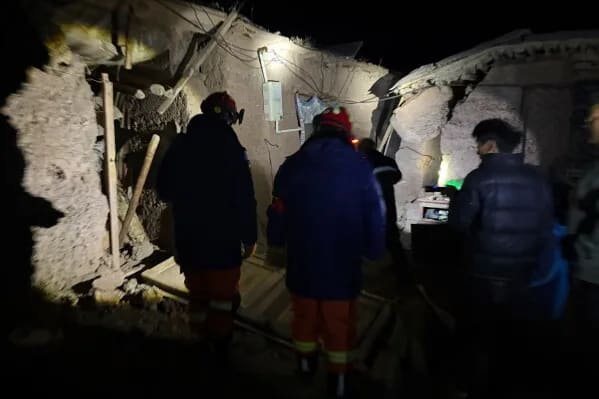
A powerful Tibet earthquake kills at least 16 people and injures 65 others. Rescue teams respond as aftershocks, collapsed homes and road closures hamper relie
A powerful Tibet earthquake has killed at least 16 people and injured 65 others, including 11 with severe injuries, according to Chinese state media reports. The magnitude 7.0 earthquake struck the mountainous Nagqu region, triggering widespread damage, collapsing hundreds of homes and forcing thousands of residents to leave their properties.
The earthquake has prompted an emergency response, with authorities deploying rescue teams and medical personnel to affected communities. Difficult terrain, rockfalls and freezing temperatures have complicated relief efforts, while continuing aftershocks have raised concerns about further damage and the safety of residents.
According to reports published by China's state news agency Xinhua, the earthquake's centre was in Baqên County, located approximately 400 kilometres northeast of Lhasa, the regional capital.
Hundreds of Homes Collapse After Powerful Earthquake
The earthquake caused significant damage across the affected area, with 339 homes reported to have collapsed. Electricity supplies were disrupted following the tremor, although power had reportedly been restored in some locations by Friday morning.
Local media reports indicated that more than 12,400 people had been relocated from affected areas. Authorities have been working to arrange temporary accommodation and provide essential assistance to residents who have lost their homes or are unable to return because of continuing safety concerns. The scale of the damage has placed additional pressure on emergency services operating in the remote mountainous region. Rescue workers are searching damaged buildings and helping injured residents while assessing the condition of homes and infrastructure.
The reported casualties could change as rescue operations continue and authorities gain access to more isolated communities.
Road Closures and Harsh Weather Complicate Rescue Efforts
Rescue operations following the Tibet earthquake have been complicated by the region's challenging geography. Rockfalls have forced the closure of roads, restricting access to some affected areas and making it more difficult for emergency teams to reach residents.
The earthquake-hit region sits at an altitude of approximately 4,800 metres above sea level. The high elevation, cold weather and difficult terrain present significant challenges for rescuers and displaced families. Residents reportedly spent the night outdoors in subzero temperatures, seeking shelter in tents and vehicles rather than returning to buildings that could be damaged by further tremors. Emergency teams must also contend with the possibility of additional collapses as damaged structures remain vulnerable to aftershocks.
China's authorities have mobilised rescue personnel and directed emergency agencies to coordinate relief operations, medical treatment and the relocation of people affected by the disaster.
More Than 400 Aftershocks Reported
Aftershocks have emerged as a major concern following the earthquake. Chinese state media reported that more than 400 aftershocks had been recorded by Friday morning.
The United States Geological Survey (USGS) recorded seven tremors close to the epicentre, with the largest measuring magnitude 5.2 at a depth of approximately 10 kilometres, according to the reports. Shallow earthquakes can cause substantial damage because seismic energy is released relatively close to the surface. Subsequent tremors can also weaken already damaged structures and increase the danger for residents and emergency workers. The continued seismic activity has encouraged residents to remain cautious about returning to their homes.
Authorities are monitoring the situation as rescue and relief operations continue across the affected mountainous communities.
China Announces Emergency Relief Funding
China's central government has announced an allocation of 50 million yuan, equivalent to approximately $7.5 million, for disaster relief efforts in Tibet.
Premier Li Qiang has called for urgent rescue operations, medical treatment for injured residents and appropriate relocation arrangements for people whose homes have been affected. The Ministry of Emergency Management has also dispatched a working group to assist with rescue coordination and disaster relief. The government's response includes efforts to support affected households, assess infrastructure damage and ensure that emergency supplies reach communities facing difficult weather and transport conditions.
The effectiveness of these measures will depend partly on how quickly relief teams can reach remote settlements and establish safe temporary accommodation.
Survivors Describe Terrifying Moments During the Earthquake
Residents have described frightening experiences as the earthquake struck during the night. According to local media reports, one resident of Nagqu, identified as Yixi Cuomu, was asleep when her house began shaking violently. She reportedly rushed outside barefoot after realising that an earthquake was taking place. Another eyewitness described the intensity of the shaking by comparing it to the sensation of hundreds of yaks running past at once.
Videos circulating on social media reportedly show villagers rushing into the streets while buildings shake. However, the footage has not been independently verified. For many residents, the immediate danger has continued even after the initial earthquake ended. The threat of aftershocks, damaged buildings and freezing outdoor conditions has made the search for safe shelter a pressing concern.
Emergency officials face the challenge of protecting displaced families while continuing search-and-rescue work in areas where buildings may remain unstable.
Why Tibet Is Vulnerable to Earthquakes
Tibet lies within a seismically active region of Asia, where major geological forces have shaped the Himalayan mountain system and surrounding high-altitude terrain.
Earthquakes in mountainous areas can cause damage beyond the immediate shaking. Landslides, falling rocks, blocked roads and damage to essential infrastructure can isolate communities and delay emergency assistance. The region's high elevation and scattered settlements can further complicate rescue operations, particularly when severe weather affects transport and communications .China has experienced other destructive earthquakes in recent years. A magnitude 6.2 earthquake in Gansu province in December 2023 killed more than 120 people, according to reports at the time.
Tibet and neighbouring Nepal have also faced severe flooding and landslides in recent months, highlighting the vulnerability of Himalayan communities to natural hazards.
Rescue Experience and Technology Could Support Relief Operations
Despite the difficult conditions, emergency teams operating on the Tibetan Plateau have experience responding to major disasters. Following a powerful earthquake in Tibet's Shigatse region in January 2025, military personnel, firefighters, police officers and specialist rescue teams were deployed to assist affected communities.
Drones can also help emergency personnel survey damaged areas, assess inaccessible terrain and identify locations where assistance is urgently needed. In the current disaster, the priority remains locating survivors, providing medical care, restoring essential services and helping displaced residents find safe shelter.
The coming hours and days will be critical as authorities continue to assess casualties, inspect damaged buildings and determine the extent of the destruction.
Information Access Remains a Challenge in Tibet
Reporting from Tibet can be difficult because foreign media access to the region is restricted and information is closely controlled by Chinese authorities. As a result, Chinese state media has become a major source of information about the earthquake, including casualty figures, damage assessments and government relief measures.
Independent verification of some details, including videos circulating online, remains limited.
The situation may become clearer as rescue teams reach additional communities and authorities release further updates.
What Happens Next?
The immediate priorities following the Tibet earthquake are search-and-rescue operations, emergency medical assistance, temporary shelter and the restoration of essential services. Authorities will also need to assess the structural safety of damaged buildings, maintain access to isolated communities and provide supplies to families displaced by the disaster.
With hundreds of reported aftershocks and challenging conditions across the mountainous region, emergency teams must balance the urgency of rescue operations with the safety of personnel and residents. The final number of casualties and the overall extent of the damage remain subject to further assessment.
Conclusion: The powerful Tibet earthquake has caused loss of life, widespread housing damage and significant disruption across the Nagqu region. As rescue teams continue working under difficult high-altitude conditions, attention remains focused on finding survivors, treating the injured and supporting thousands of displaced residents.
Source : https://www.bbc.com/news/articles/ck5ynd1z6e83o
Follow The Global Biz Insider .