UK Military Support for Saudi Arabia Expands Amid Houthi Attacks
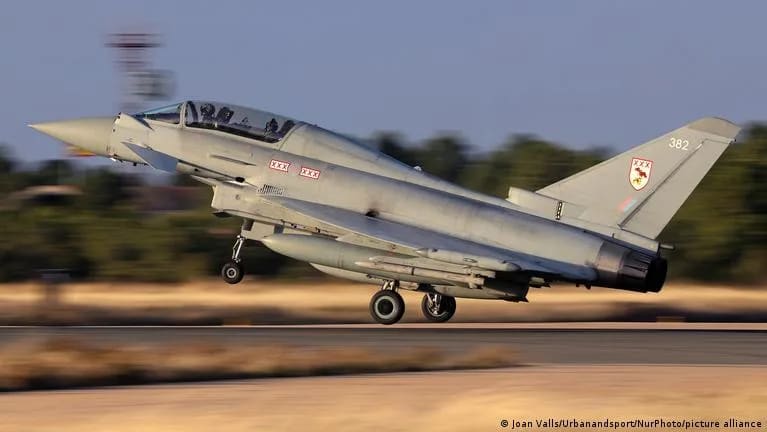
UK military support for Saudi Arabia expands as RAF Typhoon jets prepare defensive missions against Houthi missile, drone attacks amid rising regional tension.
UK military support for Saudi Arabia is expanding as Britain prepares to deploy Royal Air Force (RAF) Typhoon fighter jets for defensive air missions amid escalating missile and drone attacks by Yemen’s Houthi rebels. Announced on October 20, 2026, the move aims to protect Saudi cities, civilian populations and critical infrastructure while limiting direct British involvement in offensive operations inside Yemen.
The announcement marks a significant development in Britain’s military partnership with Saudi Arabia as tensions rise across the Middle East and threats to regional security and international trade continue to grow.
Britain to Deploy RAF Typhoon Fighter Jets
The British government has announced additional military assistance to Saudi Arabia in response to increasingly frequent Houthi attacks. Under the plan, RAF Typhoon fighter aircraft will conduct defensive counter-air missions over Saudi territory.
The aircraft are intended to help intercept incoming missiles and drones threatening population centres, airports and other strategically important infrastructure. British officials have emphasised that the fighter jets will operate defensively and will not carry out offensive strikes against Houthi targets in Yemen.
According to the UK Ministry of Defence, the additional deployment builds on existing British military assistance to the kingdom, including air-defence equipment, personnel and air-to-air refuelling support.
The decision reflects growing concerns that continued attacks could further destabilise the region and threaten the security of Saudi Arabia and neighbouring countries.
What Additional Military Assistance Will the UK Provide?
Alongside the RAF Typhoon deployment, Britain has outlined several additional measures to strengthen Saudi Arabia’s defensive capabilities.
These include:
- RAF Typhoon fighter jets: Aircraft will conduct defensive air missions to protect Saudi territory against incoming aerial threats.
- RAF A400M transport aircraft: The transport plane will support the movement of defence equipment and supplies within Saudi Arabia.
- Military advisers: British personnel will assist Saudi staff officers with military coordination and defence planning.
- Extended refuelling support: The UK will extend air-to-air refuelling assistance for Saudi defensive air operations by a further 90 days.
The package expands Britain's existing military involvement without formally committing British fighter jets to offensive strikes against Houthi positions.
The UK government says the objective is to strengthen Saudi Arabia's ability to defend its territory while supporting broader diplomatic efforts to reduce regional tensions.
Houthi Attacks Raise Regional Security Concerns
The deployment comes amid a renewed escalation in the conflict involving Yemen's Houthi movement and the Saudi-backed Yemeni government.
The Houthis have intensified missile and drone attacks against Saudi targets, including critical infrastructure and Riyadh's King Khalid International Airport. These attacks have increased pressure on Saudi Arabia to strengthen its air-defence capabilities and seek additional assistance from international partners.
The conflict also has implications beyond Saudi Arabia. Threats to regional infrastructure and maritime transport routes could affect energy supplies, shipping operations and international commerce.
The Red Sea and the Bab al-Mandab Strait are particularly important to global trade because they connect major shipping routes between Europe and Asia. Any prolonged disruption could increase transport costs, delay shipments and place additional pressure on businesses that depend on international supply chains.
Britain has therefore presented its expanded military assistance as a measure intended to protect both regional security and wider economic interests.
Why the UK Is Strengthening Its Partnership With Saudi Arabia
The UK and Saudi Arabia have maintained close defence and security ties for decades. Their cooperation includes military equipment, training, air-defence capabilities and broader strategic coordination.
The latest announcement follows earlier British assistance involving air-to-air refuelling and defensive equipment. The deployment of RAF Typhoon aircraft represents a further step in that relationship as Saudi Arabia faces renewed security challenges.
British officials have argued that instability in the Gulf and surrounding areas can have direct consequences for the UK through energy market volatility, higher business costs and disruptions to international shipping.
At the same time, London has sought to distinguish its defensive role from participation in a wider offensive campaign in Yemen. The government has stated that military assistance alone cannot provide a lasting resolution to the conflict.
Could the Deployment Increase Britain's Involvement in Yemen?
Although Britain has described the deployment as defensive, the move could expose the country to greater strategic risks as the conflict intensifies.
The presence of British fighter jets in Saudi airspace creates the possibility of direct encounters with incoming missiles and drones. Any incident involving British military aircraft could complicate an already volatile regional security situation.
The Houthis may also view increased Western military assistance to Saudi Arabia as a sign of deeper international involvement in the conflict, potentially raising concerns about further escalation.
However, the UK government has maintained that its support is limited and proportionate, with the primary purpose of protecting Saudi territory and civilians from aerial attacks.
Britain has also reiterated its support for a United Nations-led political process, arguing that negotiations and diplomatic engagement remain essential to achieving a durable settlement.
Yemen's Humanitarian Crisis Remains a Major Concern
The military escalation is taking place against the backdrop of Yemen's prolonged humanitarian crisis. Years of conflict have damaged infrastructure, weakened public services and left millions of people dependent on humanitarian assistance.
Further fighting could worsen conditions for civilians, particularly if attacks affect populated areas, essential services or transport networks used to deliver aid.
International efforts to reduce violence and protect civilians remain critical as regional powers increase their security commitments.
The UK has acknowledged the humanitarian consequences of the conflict and says it will continue diplomatic engagement and humanitarian assistance alongside its military cooperation with Saudi Arabia.
What This Means for the Middle East and Global Trade
The expansion of UK military support for Saudi Arabia highlights the growing connection between regional security, energy markets and international trade.
Saudi Arabia is a major player in global energy markets, while the Red Sea and Bab al-Mandab Strait serve as important routes for international shipping. Continued instability could increase risks for energy infrastructure, maritime operators and businesses moving goods through the region.
For global markets, the duration and intensity of the conflict will be important factors to monitor. Sustained attacks could place pressure on shipping costs, insurance premiums and energy prices, although the actual economic impact will depend on the scale of disruption and the responses of regional and international governments.
The deployment also raises broader questions about how Western countries can support regional allies while avoiding a wider military confrontation.
Conclusion
The expansion of UK military support for Saudi Arabia represents a significant response to escalating Houthi missile and drone attacks. Through defensive RAF Typhoon missions, additional military personnel, transport capabilities and extended refuelling support, Britain aims to help protect Saudi cities and critical infrastructure.
However, the deployment also underscores the risks of a wider regional escalation and the challenges of securing important energy and maritime routes.
While the UK has drawn a distinction between defensive operations and offensive strikes in Yemen, the longer-term outcome will depend on developments on the ground, regional cooperation and progress towards a political settlement.
For now, the situation remains an important story to watch for its implications for Middle Eastern security, international trade and the global economy.
Source: https://edition.cnn.com/2026/10/20/middleeast/uk-military-saudi-arabia-yemen-houthis-intl
Follow The Global Biz Insider .