Ukraine Strikes Russia's Savasleyka Air Base, Damaging Five Military Jets
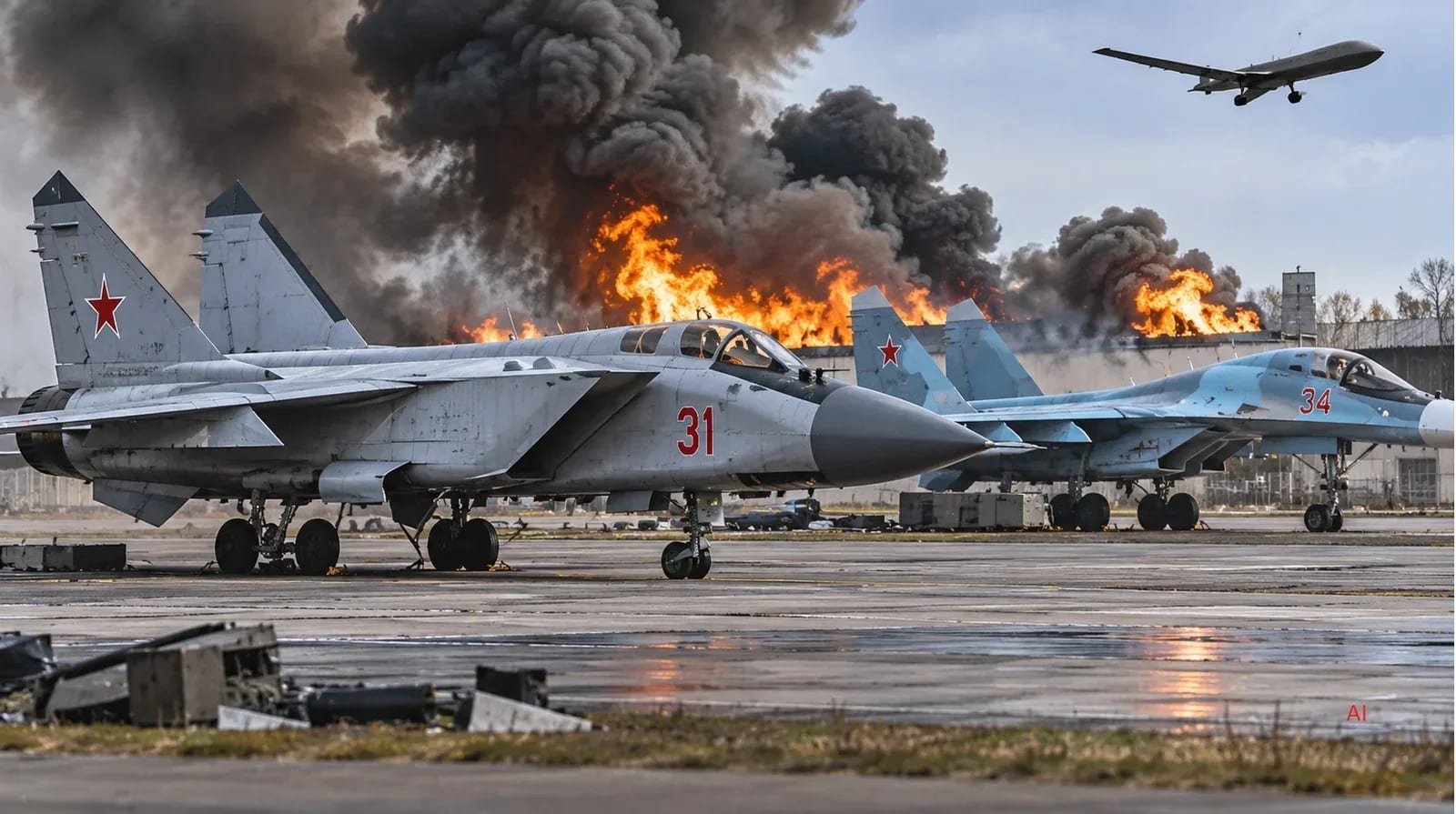
Ukraine reportedly damages five Russian military aircraft in a strike on Savasleyka air base, targeting key MiG-31 jets and Su-34 fighter-bombers.
Ukraine has carried out a long-range strike on Russia’s Savasleyka military air base in the Nizhny Novgorod region, reportedly damaging five Russian military aircraft. The attack, which took place overnight between November 24 and November 25, 2026, represents another significant development in the ongoing Russia-Ukraine war. According to Ukraine’s General Staff, the operation targeted strategically important aircraft used by Russian forces in their military campaign against Ukrainian cities and infrastructure.
Five Russian Military Aircraft Reportedly Damaged
According to Ukraine’s General Staff, the strike damaged three MiG-31 fighter jets and two Su-34 fighter-bombers stationed at the Savasleyka air base. Preliminary assessments indicated that the five aircraft would remain unable to operate for some time. Ukrainian authorities also stated that the full extent of the damage and the total number of affected aircraft were still being evaluated.
The attack is particularly significant because both aircraft types play important roles in Russia’s military operations. The MiG-31 is a high-speed interceptor that can carry Kinzhal hypersonic missiles, while the Su-34 is a fighter-bomber designed to conduct air-to-ground missions. Their reported damage could temporarily affect Russia's ability to conduct certain aerial operations against Ukrainian targets.
Why Savasleyka Air Base Is Strategically Important
Located in Russia’s Nizhny Novgorod region, east of Moscow, Savasleyka air base is an important facility for Russian military aviation. The installation is associated with MiG-31 aircraft capable of carrying Kinzhal air-launched ballistic missiles, which Russia has used during attacks against Ukraine.
These missiles have become an important part of Russia's long-range strike capabilities. Aircraft operating from the base can contribute to attacks that threaten Ukrainian cities, military facilities and critical infrastructure. Consequently, targeting the airfield could affect Russia's ability to deploy certain aircraft and launch missile operations.
For Ukraine, striking military aviation infrastructure deep inside Russian territory is part of a broader strategy aimed at weakening Moscow's operational capabilities and reducing the effectiveness of its long-range attacks.
Ukraine Expands Its Long-Range Military Operations
The Savasleyka operation comes amid an intensification of Ukrainian strikes against Russian military and strategic infrastructure. Kyiv has increasingly relied on long-range drones and other strike capabilities to target military installations, logistics networks, fuel storage facilities and industrial infrastructure supporting Russia's war effort.
Ukraine has also reported attacks against Russian ballistic-missile launchers and other military assets in recent months. These operations are intended to disrupt the systems Russia uses to coordinate and sustain its military campaign.
In the same round of operations, Ukrainian forces also reported strikes against oil refineries in Russia's Samara region, along with ammunition warehouses, fuel depots and other logistical facilities in Russian-occupied territories. Such targets are strategically important because fuel, ammunition and transportation networks are essential to maintaining military operations.
Russia's Military Infrastructure Faces Growing Pressure
Repeated Ukrainian attacks on military airfields and logistical facilities highlight the increasing pressure on Russia's military infrastructure. Aircraft stationed at major air bases require extensive maintenance, specialised equipment, trained personnel and secure operational facilities. Damage to these assets can create additional logistical challenges for military planners.
The reported damage to three MiG-31 jets and two Su-34 aircraft could therefore have implications beyond the immediate loss of operational aircraft. Russia may need to redistribute available aircraft, adjust deployment schedules and strengthen security at other military installations.
However, the longer-term consequences will depend on the actual extent of the damage and how quickly Russia can repair or replace the affected equipment. Independent confirmation of the full damage assessment remains important.
Russia-Ukraine War Continues Amid Intensifying Attacks
The strike on Savasleyka air base comes as the Russia-Ukraine conflict continues despite renewed diplomatic efforts to explore a possible resolution. Russia launched its full-scale invasion of Ukraine in February 2022, and the conflict has since developed into a prolonged military confrontation involving ground operations, missile attacks, drone warfare and strikes against critical infrastructure.
While Russian forces have continued targeting Ukrainian energy facilities and frontline cities, Ukraine has increasingly attempted to strike military and industrial targets within Russian territory. These operations reflect Kyiv's strategy of placing pressure on the infrastructure and resources supporting Moscow's military campaign.
The latest attack also highlights the growing importance of long-range precision strikes in modern warfare. Military airfields, missile launch platforms, fuel facilities and ammunition depots have become important targets because disrupting them can affect a country's ability to sustain military operations.
What the Savasleyka Air Base Strike Means for the Conflict
The reported Ukrainian strike on Savasleyka air base demonstrates Kyiv's continued efforts to weaken Russia's military aviation capabilities and disrupt its long-range missile operations. If the damage to the five aircraft is confirmed and proves substantial, the attack could temporarily reduce the availability of important Russian military platforms.
Nevertheless, the overall impact will depend on Russia's ability to repair damaged aircraft, replace operational losses and adapt its military deployment strategy. The incident also underlines the increasing vulnerability of strategic military installations to long-range attacks.
As the Russia-Ukraine war continues, further developments involving military infrastructure, drone operations and long-range weapons are likely to remain central to the conflict. The Savasleyka strike is another indication that both countries are seeking to weaken their opponent's military capabilities far beyond the immediate battlefield.
Source: https://www.independent.co.uk/
Follow: https://globalbizinsider.com/