Zelenskyy Slams Trump for Calling Putin a Friend
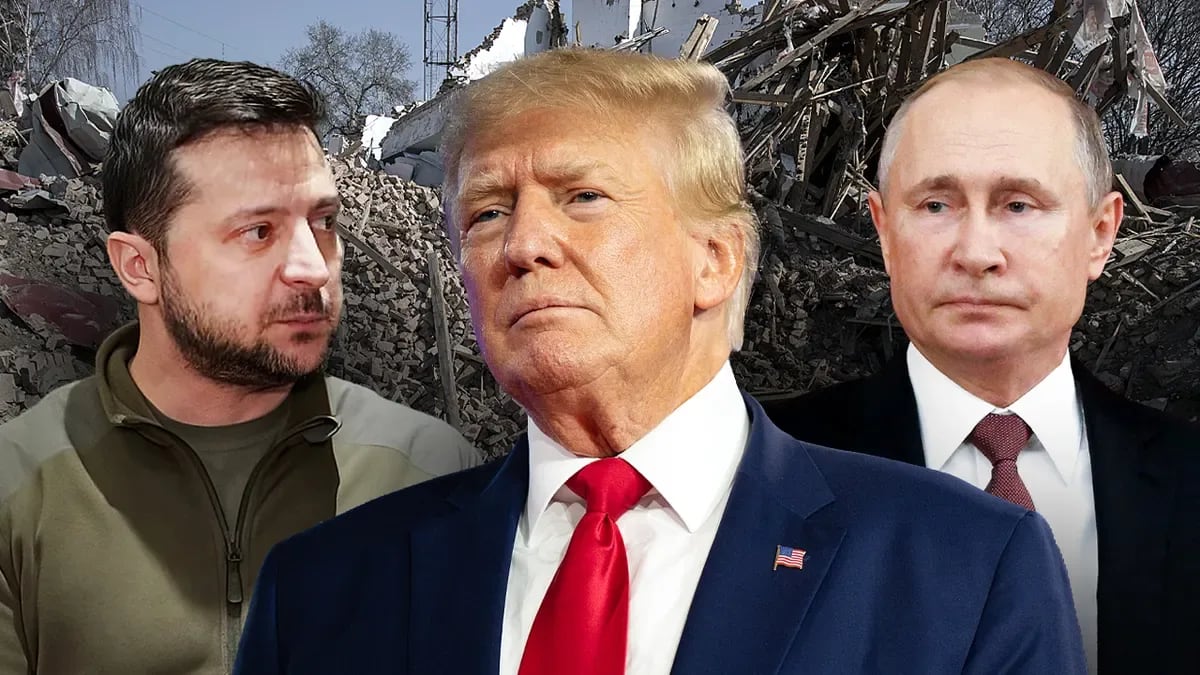
Ukraine's President Zelenskyy criticises Trump for calling Putin a friend, comparing the remark to befriending Hitler during World War II.
Ukrainian President Volodymyr Zelenskyy has criticised US President Donald Trump for describing Russian President Vladimir Putin as his friend, drawing a controversial comparison with the idea of calling Adolf Hitler a friend during World War II. Zelenskyy's remarks have renewed attention on the complicated relationship between Washington, Moscow and Kyiv as the Russia-Ukraine war continues and diplomatic efforts to reach a settlement face significant challenges.
In a recent interview with the BBC, Zelenskyy described Trump's comments as strange and questioned how the Russian leader could be considered a friend while Russia continues its military aggression against Ukraine. Speaking in English, the Ukrainian president said that Putin was an aggressor and a killer and argued that such a figure could not be regarded as a friend. He further compared the situation to someone describing Hitler as a good friend during the Second World War, emphasising his disagreement with Trump's public remarks.
Trump's ‘My Friend’ Comment Sparks International Controversy
The controversy followed a meeting between Donald Trump and Vladimir Putin on November 19, 2026, during the Asia-Pacific Economic Cooperation (APEC) Leaders' Summit in Shenzhen, China. During their interaction, Trump greeted Putin warmly and referred to him as his friend. The US president subsequently shared a photograph of the two leaders shaking hands on his Truth Social platform, accompanied by the caption "My Friend".
The public display of cordial relations attracted attention because of the ongoing conflict between Russia and Ukraine. While diplomatic engagement between world leaders is often considered important for international negotiations, Zelenskyy's response highlights the concerns of the Ukrainian government regarding the way Washington approaches its relationship with Moscow.
Zelenskyy Calls for Stronger US Pressure on Russia
Beyond criticising Trump's personal remarks, Zelenskyy also expressed concerns about the broader American position on the Russia-Ukraine conflict. He argued that the United States should use its diplomatic influence and international standing to place greater pressure on Moscow rather than maintaining what he considers an overly neutral approach.
According to Zelenskyy, treating an aggressor and its victims as equivalent parties risks weakening international support for Ukraine. He stressed that Washington should communicate a clearer position and demonstrate stronger commitment to addressing Russia's military actions.
The Ukrainian president also expressed frustration over the lack of substantial progress in peace negotiations. He indicated that Ukraine needed concrete developments rather than diplomatic signals that could be interpreted as favouring Moscow's position.
Growing Tensions Between Washington and Kyiv
Relations between Donald Trump and Volodymyr Zelenskyy have experienced several periods of tension. One of the most widely discussed incidents occurred in February 2025, when the two leaders had a public disagreement during a meeting at the White House. Their differences have continued over various aspects of American policy towards the war.
More recently, disagreements have emerged over Ukrainian attacks on Russian oil refineries, which Trump has linked to higher energy costs. The US president has also raised the possibility of reducing intelligence support for Ukraine, adding to Kyiv's concerns about the reliability of American assistance.
Zelenskyy has argued that Washington's approach could encourage Russia to continue its military operations if Moscow does not face sufficient diplomatic and strategic pressure.
The Impact of the Russia-Ukraine War on International Relations
The ongoing Russia-Ukraine war remains one of the most significant challenges to international security and European stability. Since Russia launched its full-scale invasion of Ukraine in February 2022, the conflict has affected global diplomatic relations, energy markets, international security arrangements and economic cooperation.
The United States has played an important role in supporting Ukraine, while also pursuing diplomatic engagement with Russia. However, differences over negotiations, military assistance and the conditions required for a possible peace agreement have created challenges for relations between the countries involved.
The latest comments from Zelenskyy demonstrate how sensitive diplomatic language can become when it concerns an ongoing war. For Ukraine, public expressions of friendship between Washington and Moscow carry political significance because American support remains an important element of its security strategy.
Winter Challenges and Ukraine's Security Concerns
Zelenskyy's criticism also comes at a difficult period for Ukraine, as continued Russian attacks on energy infrastructure raise concerns about the country's ability to manage the approaching winter. Damage to electricity and heating facilities can create serious difficulties for civilians, particularly during periods of extremely cold weather.
Ukraine has repeatedly sought additional military assistance, including air defence systems and ammunition, to protect its cities and critical infrastructure. The availability of international support remains an important issue as the country attempts to defend its territory while maintaining diplomatic efforts towards a possible resolution.
What Trump's Relationship With Putin Could Mean for Future Peace Talks
The relationship between Donald Trump and Vladimir Putin is likely to remain an important factor in future discussions about ending the Russia-Ukraine war. Direct communication between Washington and Moscow could create opportunities for negotiations, but the Ukrainian government continues to emphasise that any diplomatic settlement must take its security interests and sovereignty into account.
Zelenskyy's latest remarks underline the differences between Ukraine's expectations and the diplomatic approach demonstrated by the US president. While international engagement may be necessary to achieve progress, Kyiv is calling for a clearer American position and greater pressure on Russia.
The controversy surrounding Trump's description of Putin as a friend therefore extends beyond a personal exchange between two world leaders. It reflects broader disagreements about diplomacy, international responsibility and the conditions necessary for achieving a sustainable peace in Ukraine.
As the conflict continues, the positions taken by the United States, Russia, Ukraine and their international partners will remain central to the future of European security and global diplomatic relations.
Source: https://www.theguardian.com/world/liv
Follow: https://globalbizinsider.com/