Albania Protests: Students Demand Edi Rama’s Resignation
Meta Description: Albania protests intensify as students and young activists demand Prime Minister Edi Rama’s resignation amid corruption allegations, police
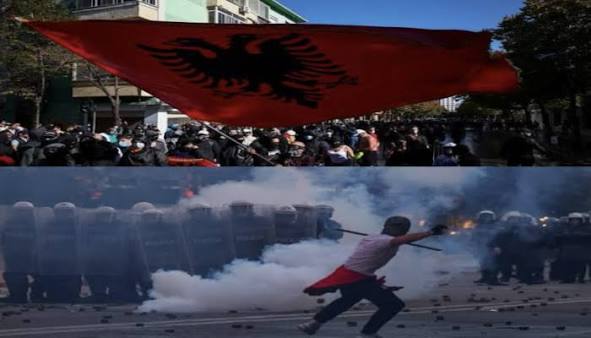
Albania protests have intensified as students, university groups and young activists continue to confront riot police in the capital, Tirana, demanding the resignation of Prime Minister Edi Rama. The demonstrations have been marked by violent clashes, attacks on government buildings and growing anger over alleged corruption, university conditions and the government's handling of public grievances.
According to official figures cited in the report, 295 people had been injured before Monday's violence, including 186 police officers. The clashes have continued for seven consecutive days, raising concerns about public order, police conduct and Albania's political stability.
What Is Driving the Protests in Albania?
The demonstrations reflect a combination of political frustration, demands for better educational conditions and concerns about corruption. Students and young people have emerged as prominent participants, arguing that their concerns have not received adequate attention from the government.
Protesters are also calling for Rama to step down and for the establishment of a technocratic government to prepare the country for what they describe as fair and democratic elections.
The movement has drawn support from young activists who say they have lost confidence in existing political institutions. Some demonstrators have also raised concerns about emigration, limited opportunities and the long-standing difficulties faced by younger generations in Albania.
Violent Clashes Spread Across Tirana
Tirana has witnessed intense confrontations between demonstrators and security forces. A police station and government buildings have been attacked, while riot police have used water cannon and tear gas to disperse crowds.
During the clashes, protesters were seen removing cobblestones from paths and public spaces, apparently preparing to use them during confrontations with officers. Volunteers wearing reflective jackets have assisted people affected by tear gas, while others have distributed saline solutions to help relieve its effects.
The violence has created a tense atmosphere in public parks and surrounding streets. Cafes and other businesses have also been affected, with tear gas reaching nearby establishments as protesters and police moved through the area.
Concerns Over Police Conduct and Arrests
The response by security forces has become another major source of controversy. Human rights lawyer Gentian Sejrani, who provides legal assistance to people arrested during the demonstrations, criticised what he described as chaotic police actions and questioned the evidence presented in some cases.
He said that some individuals had allegedly been arrested despite having no connection to the protests. According to his account, people directly involved in throwing objects at officers can sometimes evade arrest, while others may be detained in questionable circumstances.
These allegations have added to tensions between protesters and police. While demonstrators accuse authorities of using excessive force, officers have also faced attacks during the unrest.
The competing accusations highlight the challenge of restoring public order while protecting the rights of demonstrators and ensuring that arrests are supported by evidence.
Young Activists Demand Political Change
Young people have played a central role in organising and sustaining the demonstrations. Activist Sidorela Vatnikaj, a 27-year-old master's student with years of experience in anti-government protests, described how demonstrators coordinate between groups, arrange legal assistance and organise first-aid support.
She expressed discomfort with violence against police officers but argued that many protesters feel ignored by political leaders. She also pointed to the departure of large numbers of Albanians from the country in search of better opportunities.
Vatnikaj has called for a technocratic government to oversee preparations for democratic elections. She also accused Rama's administration of benefiting powerful interests and questioned the fairness of previous elections. These are allegations made by the activist and should not be treated as independently established findings.
The demonstrations have also been influenced by youth-led protest movements in other countries, with activists seeing international examples as encouragement to demand greater accountability at home.
Edi Rama Rejects Calls for His Resignation
Prime Minister Edi Rama has taken a firm position against the demonstrators. Addressing senior police officers after a stone was thrown at police during the unrest, he warned that negotiating with violent protesters would undermine the authority of the state.
Rama has also suggested that Albania is the target of a coordinated attack involving outside forces. His comments reflect the government's position that the unrest extends beyond domestic political grievances.
The prime minister has been a dominant figure in Albanian politics for years and has led the government for approximately 13 years, according to the report. He has made European Union membership by 2030 a central political objective, arguing that his leadership is essential to achieving that goal.
However, protesters question his government's record and insist that political change is necessary to address corruption concerns, democratic accountability and the country's economic and social challenges.
Albania's European Union Ambitions Face a Political Test
The continuing unrest presents a challenge for Albania as it pursues closer integration with the European Union. Political stability, democratic institutions, accountability and the rule of law are important considerations in the country's European ambitions.
The protests have brought these issues into sharper focus, particularly as young Albanians demand a political system that offers greater transparency and better opportunities.
Whether the demonstrations lead to negotiations, government concessions or further confrontation remains uncertain. Much will depend on how authorities respond to public demands and whether protesters can maintain pressure without escalating the violence.
Conclusion
The ongoing Albania protests reveal a deepening conflict between the government and a section of the country's younger population. Demands for political accountability, better university conditions and action against corruption have combined with anger over police conduct to fuel the demonstrations.
With clashes continuing in Tirana and the government resisting calls for the prime minister's resignation, Albania faces a difficult test of its political institutions and public trust. The coming days will be crucial in determining whether dialogue can emerge from the unrest or whether the confrontation will continue.
Source :https://www.bbc.com/news/articles/cmy4xjlpqgd3o
Follow The Global Biz Insider .