India’s Role in Ukraine Peace Talks: Lessons from the Korean War
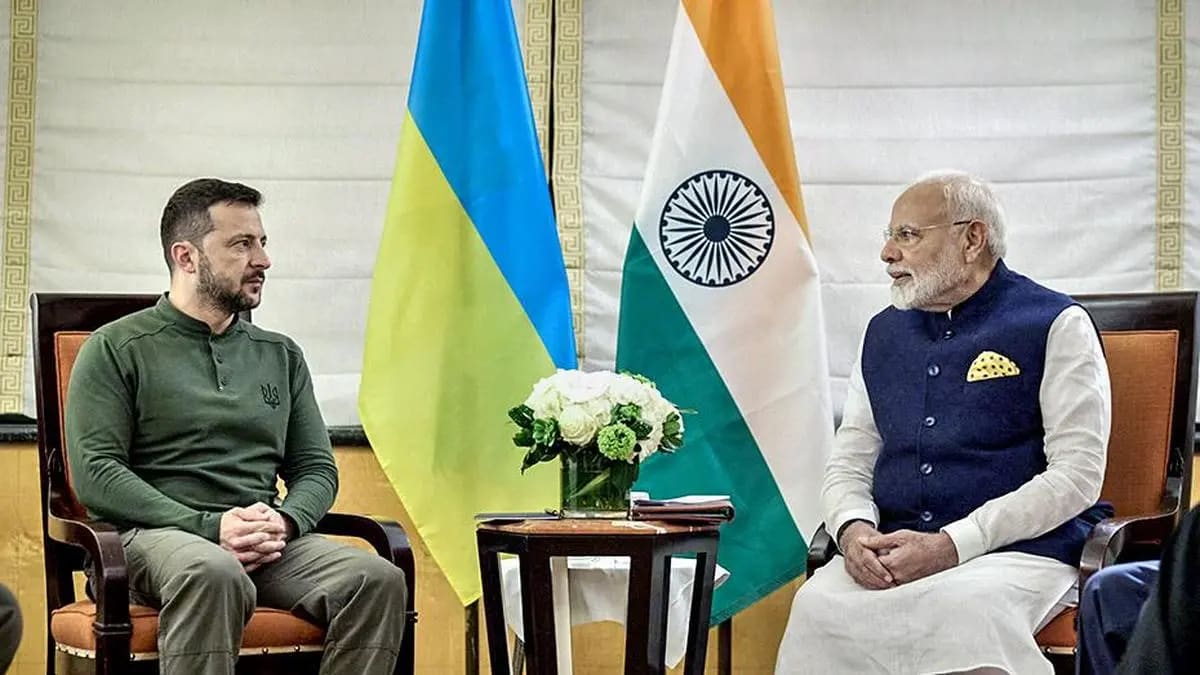
Explore India's role in Ukraine peace talks, its Korean War diplomacy, strategic autonomy, and the economic impact of global peace efforts.
India’s diplomatic role in Ukraine peace talks has gained renewed attention as the international community searches for a peaceful resolution to the Russia-Ukraine conflict. With strong diplomatic relationships across competing geopolitical blocs, India has the potential to contribute to dialogue, confidence-building measures, and humanitarian initiatives. Its historical experience during the Korean War offers valuable lessons about how a country can support peace negotiations without becoming directly involved in a conflict.
This subject highlights the growing importance of international diplomacy, geopolitical stability, and strategic decision-making in an increasingly interconnected world. As the Russia-Ukraine war continues to affect global markets, energy security, food supplies, and international trade, diplomatic initiatives are becoming increasingly important for governments and businesses worldwide.
India’s Diplomatic Approach to the Russia-Ukraine Conflict
India has consistently advocated dialogue and diplomacy as the preferred means of resolving the Russia-Ukraine conflict. Rather than aligning completely with either side, New Delhi has sought to maintain communication with Moscow, Kyiv, Washington, and European partners. This approach reflects India's strategic autonomy and its broader objective of protecting national interests while supporting a peaceful international order.
India's position is also shaped by its historical ties with Russia, expanding economic and strategic relationships with Western countries, and growing influence among developing nations. These relationships provide diplomatic opportunities, although they also create challenges when the interests of international partners conflict. India's ability to maintain constructive engagement with multiple stakeholders could help support future peace initiatives, provided both Russia and Ukraine are willing to participate meaningfully.
What the Korean War Teaches About Peace Negotiations
India's involvement in the Korean War between 1950 and 1953 provides an important historical example of its diplomatic engagement in international conflicts. During the war, India supported efforts to achieve a settlement and played a significant role in addressing the sensitive question of prisoners of war. India chaired the Neutral Nations Repatriation Commission following the 1953 armistice and contributed personnel to help manage the repatriation process.
This experience demonstrated that countries outside the principal fighting parties can make meaningful contributions to peace processes. India's involvement combined diplomatic negotiations, humanitarian considerations, and multilateral cooperation. Although the Korean War did not produce a comprehensive peace treaty, the armistice helped stop large-scale fighting and established a framework for managing the immediate conflict.
The comparison with Ukraine is particularly relevant because both situations illustrate the difficulties of negotiating peace amid deep political disagreements and competing security interests. However, the two conflicts have different historical backgrounds, territorial questions, and international dynamics. The Korean War should therefore be viewed as a source of diplomatic lessons rather than a direct blueprint for resolving the Russia-Ukraine war.
Can India Become a Mediator in Ukraine Peace Talks?
India's potential role in Ukraine peace talks depends on its ability to maintain credibility with both sides and identify areas where practical cooperation is possible. A successful mediator must understand the security concerns, political objectives, and domestic pressures influencing each participant. Maintaining diplomatic relationships is an advantage, but it does not automatically guarantee that either side will accept mediation.
India could contribute by encouraging sustained negotiations, supporting humanitarian arrangements, facilitating discussions on civilian protection, and promoting agreements that reduce the risks of further escalation. It could also support confidence-building measures concerning food exports, maritime security, energy infrastructure, and the safety of commercial shipping. These areas may offer opportunities for incremental progress even when broader territorial and political disagreements remain unresolved.
Any meaningful diplomatic initiative must also respect Ukraine's sovereignty and territorial integrity, alongside the need for a durable settlement that addresses legitimate security concerns through negotiations. India's influence will ultimately depend on whether its diplomatic engagement produces practical outcomes rather than remaining limited to public calls for peace.
Why the Russia-Ukraine War Matters to the Global Economy
The Russia-Ukraine conflict has consequences that extend well beyond Europe. Disruptions to energy markets, agricultural exports, shipping routes, and international supply chains can affect businesses, consumers, and governments across the world. Developing economies are particularly vulnerable to fluctuations in food and fuel prices because higher import costs can increase inflation and put pressure on public finances.
For international businesses, geopolitical uncertainty can complicate investment planning, raise transportation and insurance costs, and create risks for cross-border transactions. Companies operating in manufacturing, agriculture, logistics, energy, and financial services must consider how prolonged instability may influence their operations and market strategies.
A credible peace process could improve economic confidence by reducing uncertainty and creating opportunities for trade and reconstruction. Nevertheless, businesses should not assume that diplomatic progress will immediately restore pre-war trading conditions. Sanctions, security risks, infrastructure damage, and changes in international trade relationships could continue to influence markets even after a ceasefire or political agreement.
India's Strategic Autonomy and International Influence
India's approach to the Ukraine conflict reflects its long-standing commitment to strategic autonomy, which allows it to make foreign policy decisions according to its national interests rather than automatically following the position of another power. This approach has become increasingly significant as competition among major powers influences global security, technology, energy, and trade.
Maintaining relations with Russia while deepening partnerships with Europe and the United States gives India access to multiple diplomatic channels. At the same time, this balancing strategy requires careful decision-making. Some international partners may question India's position when its diplomatic statements, economic relationships, or voting behaviour do not fully align with their expectations.
For India to strengthen its credibility as a potential facilitator, it will need to demonstrate that its engagement can support concrete outcomes. Consistent communication, humanitarian cooperation, respect for international law, and constructive engagement with Ukraine and Russia will be essential to any larger diplomatic contribution.
The Importance of Multilateral Diplomacy in Resolving Conflicts
The Russia-Ukraine war demonstrates that modern conflicts rarely remain confined to the countries directly involved. Their consequences affect international institutions, regional alliances, commodity markets, migration patterns, and global development priorities. This makes multilateral diplomacy an important part of efforts to achieve a sustainable settlement.
International organisations and neutral or non-belligerent countries can provide platforms for dialogue, facilitate humanitarian arrangements, and encourage agreement on specific issues. However, lasting progress requires the direct participation of the principal parties. External actors can support negotiations, but they cannot impose a durable political settlement without addressing the interests and concerns of those involved.
India's experience in the Korean War reinforces the value of combining diplomatic engagement with practical humanitarian action. In the Ukraine conflict, similar efforts could help create conditions for wider negotiations, particularly where agreements on civilian safety, prisoners of war, maritime activity, and essential supplies are possible.
Challenges Facing India's Peace Diplomacy
Despite its diplomatic relationships and international standing, India faces several obstacles in attempting to contribute to peace negotiations. Russia and Ukraine have different positions on territory, security guarantees, military operations, and the conditions required for ending hostilities. Reconciling these differences would require sustained negotiations and a willingness to make difficult compromises.
India must also manage its own strategic and economic interests while maintaining confidence among its international partners. Its historical relationship with Russia can provide access to Moscow, but it may also raise questions in Kyiv and Western capitals about the extent of India's impartiality. Building trust therefore requires transparent communication, balanced engagement, and a clear commitment to a peaceful settlement based on international law.
Another challenge is that diplomacy often produces gradual results rather than immediate breakthroughs. Even when countries agree on humanitarian measures or limited ceasefires, translating these arrangements into a comprehensive and lasting settlement can be difficult. India's contribution should consequently be assessed by the practical progress it helps achieve, rather than by the visibility of diplomatic meetings alone.
The Future of India-Ukraine Peace Talks
India's future role in Ukraine peace talks will depend on developments in the conflict, the willingness of Russia and Ukraine to negotiate, and the broader international diplomatic environment. New Delhi could contribute most effectively by combining high-level engagement with targeted initiatives that address immediate humanitarian and economic concerns.
The Korean War offers a reminder that diplomatic influence does not depend exclusively on military strength or economic power. Countries can contribute to conflict resolution through negotiation, international cooperation, humanitarian assistance, and the development of workable arrangements between opposing parties. However, historical experience also shows that stopping active fighting does not necessarily resolve the underlying political disputes.
For India, the opportunity lies in translating its diplomatic relationships into constructive action while recognising the limits of its influence. Progress on specific issues, such as protecting essential infrastructure, supporting humanitarian exchanges, and maintaining safe commercial shipping, could help build confidence for more difficult negotiations.
Conclusion: India’s Role in Building a Path to Peace
India's diplomatic role in Ukraine peace talks highlights the growing importance of dialogue, strategic autonomy, and multilateral cooperation in international affairs. Its experience during the Korean War demonstrates how diplomatic engagement and humanitarian initiatives can contribute to managing a conflict, even when a complete political settlement remains elusive.
As the Russia-Ukraine conflict continues to influence global security and economic stability, India has an opportunity to support practical peace efforts while maintaining constructive relationships with the principal stakeholders. Success, however, will require more than diplomatic access. It will depend on trust, sustained negotiations, respect for international law, and the willingness of the parties involved to pursue a durable settlement.
For businesses, policymakers, and international observers, the central lesson is clear: sustainable peace is not only a security objective but also a foundation for global economic stability, international cooperation, and long-term growth.
Source : https://r.search.yahoo.com/_ylt=A2RTlhnRW
Follow: Global Biz Insider