Israel’s Young Voters Shift Right as Election Race Tightens
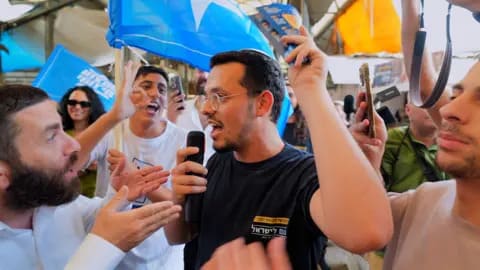
Israel’s first-time voters are shaping a closely contested election, with far-right parties gaining support amid security concerns and social media campaigning
Israel’s upcoming general election is highlighting a growing generational divide in the country’s political landscape, with first-time voters emerging as an important group in a closely contested race. Security concerns, changing public attitudes and social media campaigning are influencing how young Israelis view the country’s political future.
More than half a million first-time voters are expected to participate in the election. Polling cited by the BBC suggests that a significant proportion of these voters are considering far-right parties, including Jewish Power, led by National Security Minister Itamar Ben-Gvir, and Religious Zionism, associated with Bezalel Smotrich.
The election is taking place amid continuing debates over national security, the Israeli-Palestinian conflict, democratic institutions and the country’s long-term political direction.
Itamar Ben-Gvir Attracts Support Among Young Voters
Itamar Ben-Gvir has become a prominent figure in Israel’s far-right political movement. Once regarded as too extreme by parts of the political establishment, he now holds a senior government position and has attracted a visible following among younger Israelis.
During a campaign visit to Ramle, a mixed city with Jewish and Arab residents, Ben-Gvir encouraged young people to participate in the election. Supporters accompanying him described him as a politician who could strengthen national security and represent their ideological beliefs.
Some young voters interviewed during the campaign said they viewed Ben-Gvir as a leader capable of providing greater security, particularly in the aftermath of the Hamas-led attacks on Israel on October 7, 2023, which triggered the Gaza war.
Their support reflects the importance that many voters place on security and military preparedness when evaluating political candidates.
However, Ben-Gvir remains a divisive figure. His positions on the occupied West Bank, Jewish settlement in Gaza and the proposed emigration of Palestinians have drawn strong criticism from opponents and liberal Israelis.
October 7 Attacks Influence Political Attitudes
The October 7 attacks have become an important reference point in discussions about the political preferences of young Israeli voters.
For some first-time voters, the attacks strengthened concerns about national security and reinforced support for politicians advocating a harder line on the Israeli-Palestinian conflict.
Several young people interviewed during the campaign said the events had influenced their political outlook, with some expressing doubts about the possibility of achieving peace under current conditions.
Political analyst Dahlia Scheindlin told the BBC that the rightward movement among young Israeli Jews predates the latest election. She pointed to a longer-term trend in which younger generations have grown up amid repeated conflicts and have had limited personal experience of earlier efforts to achieve peace.
According to this analysis, changing political attitudes cannot be explained by a single event alone. They also reflect years of conflict, public debate and evolving perceptions of security and national identity.
Polls Point to Strong Support for Right-Wing Parties
Polling cited in the BBC report indicates that far-right parties could attract a meaningful share of first-time voters.
A survey for Israeli newspaper Yedioth Ahronoth suggested that more than 16% of first-time voters intended to support either Jewish Power or Religious Zionism. Another survey conducted for Channel 12 indicated that nearly three-quarters of young voters identified as right-wing or centre-right.
These figures suggest that political preferences among younger voters could have implications for the balance between pro-government and opposition blocs.
Nevertheless, the figures represent polling intentions rather than final election results. Voter turnout, campaign developments and last-minute changes in preferences could influence the eventual outcome.
With the race appearing closely contested, the participation of new voters may prove particularly important.
Social Media Becomes a Major Campaigning Tool
Social media is playing an increasingly prominent role in Israel’s election campaign, particularly in efforts to reach younger audiences.
Platforms such as TikTok and Instagram have become important channels for political messaging, allowing candidates to communicate directly with voters through short videos, personal appearances and informal campaign content.
Yonatan Shalev, a young candidate with the centre-right opposition party Beyachad, told the BBC that Ben-Gvir had recognised the potential of social media earlier than many rival politicians.
Shalev also highlighted efforts by opposition candidates to improve their digital outreach. Campaigns featuring younger politicians, fitness videos and informal street interactions illustrate how candidates are adapting their communication strategies to audiences that may not regularly follow traditional news outlets.
Benjamin Netanyahu and other political figures have also used fast-paced online videos to promote their messages.
The growing importance of digital platforms means that political campaigns are increasingly competing for attention in online spaces where concise, visually engaging content can reach large audiences.
Opposition Parties Seek to Attract Younger Voters
Although polling suggests substantial support for right-wing positions among young Israelis, the younger electorate is not politically uniform.
Opposition parties are attempting to attract first-time voters by highlighting concerns about democratic institutions, government policies and the country’s future direction.
Some younger voters have expressed enthusiasm for candidates they consider more relatable or better equipped to understand their generation.
The BBC report also described protests against Ben-Gvir at a student event in Tel Aviv, demonstrating that opposition to far-right politics remains visible among parts of the younger population.
The campaign therefore reflects competing interpretations of Israel’s security and identity, with different candidates presenting contrasting approaches to the country’s future.
Voter Turnout Could Influence the Election Outcome
The election’s outcome may depend not only on voter preferences but also on whether supporters actually cast their ballots.
Research cited by the BBC suggests that more than 80% of first-time voters surveyed said they were likely to vote. However, the same research indicated that younger people could be less engaged with political protests and petitions and more sceptical of democratic institutions.
Turnout patterns in previous elections have also highlighted differences between communities and political groups. Candidates are consequently working to mobilise supporters, particularly in an election where the main political blocs appear closely matched.
For parties across the political spectrum, connecting with first-time voters has become a significant campaign priority.
What the Election Could Mean for Israel’s Political Future
Israel’s election campaign highlights the growing importance of younger voters in shaping debates over security, national identity, democratic governance and relations with Palestinians.
Support for far-right parties among some young Israelis reflects concerns about security and changing attitudes after years of conflict. At the same time, opposition candidates are attempting to persuade younger voters that alternative political approaches deserve consideration.
Social media is adding another dimension to the campaign, changing how politicians communicate and how voters encounter political information.
As election day approaches, the decisions of more than half a million first-time voters could help determine the balance of power. Their choices will offer an important indication of how Israel’s next generation views the country’s political priorities and future direction.
Source :https://www.bbc.com/news/articles/cmvg632xgndeo
Follow The Global Biz Insider .